HPtex Delivers High-Precision Universal Space Mesh to Perfection
July 2026







HPtex Delivers High-Precision Universal Space Mesh to Perfection
July 2026
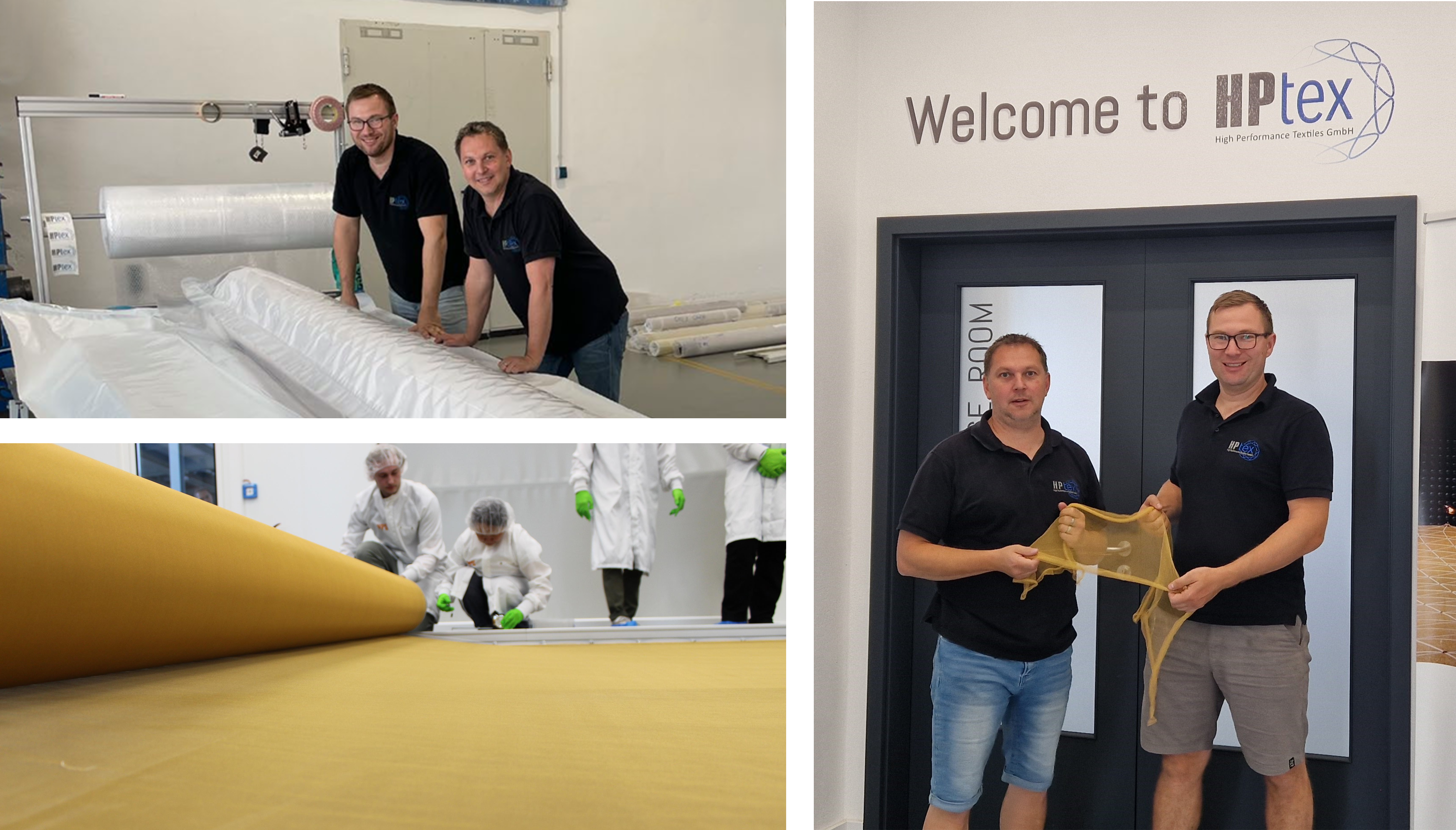
HPtex, the joint venture between HPS and IPROTEX for metallic high-performance knitted structures in space applications, reports another manufacturing success: A Universal Space Mesh was produced and delivered for a space customer, with quality inspection revealing not a single defect. This success underscores the exceptional precision of “Made in Germany” mesh manufacturing and HPtex’s growing role as a supplier for demanding antenna and reflector applications in the international space market.
The delivered mesh is based on the “Universal Space Mesh” product concept and is designed for applications in deployable or rigid reflector antennas. A mesh roll measuring 2.2 meters in width and 11 meters in length was produced. Particularly remarkable is the quality of the delivery: While a certain number of defects is commonly accepted in the market, the number of defects reported by HPtex in this case was zero, an exceptionally low level.
The challenge lies in the detail: The process uses extremely fine, gold-coated metal wires with a diameter of just 25 micrometers. In total, a delivery of this size incorporates around 200 kilometers of wire into the finished product. The ATLAS warp-knitting pattern used is designed to prevent runs from propagating in the event of local defects, thereby further increasing the mechanical robustness of the mesh.
“All of us across the group are very proud of the high quality that our team in Münchberg is now consistently delivering in series production,” says Dr.-Ing. Ernst K. Pfeiffer, CEO of HPS GmbH. “Six years ago, we could hardly have expected that the combination of space expertise and textile manufacturing competence from the automotive/aircraft segment would develop so dynamically into an internationally sought-after supplier in such a short time. Working with our colleagues in Upper Franconia is a great pleasure — and we still have a great deal ahead of us.”
CIMR Reflector Mesh for the European Union’s Space Programme Also Undergoing Test Campaign
At the same time, HPtex’s mesh is also represented in one of Europe’s most visible space programmes: For the Copernicus CIMR mission of ESA and the European Union, a large-format mesh was integrated into the Engineering Qualification Model of the Deployable Reflector Assembly. The Deployable Reflector Assembly (DRA) from LSS is part of the Large Deployable Reflector Subsystem and is being tested as part of the ongoing qualification activities.
This mesh covers an area of approximately 10.2 by 9.5 meters and is likewise based on a very fine wire diameter of 20 micrometers. To deliver this large mesh, HPtex fully automatically stitched the large mesh together from three individual panels. The test campaign at DRA level has been running since the second quarter of 2026 and, according to the current project status, is progressing successfully. Completion of the Critical Design Review for the Large Deployable Reflector Subsystem is planned for the third quarter of 2026.
Synergies Between Space Expertise and Technical Textile Competence
HPtex was founded in 2020 as a joint venture between HPS High Performance Space Structure Systems GmbH and IPROTEX. The company combines space experience with decades of expertise in technical textiles. This combination creates an industrial basis for high-precision metallic mesh structures such as those required for deployable satellite antennas, reflectors and other space applications.
Production in Münchberg uses specialized German warp-knitting machines that enable mesh widths of up to around 4.5 meters. This makes it possible to produce large-format reflector surfaces with as few seams as possible — an important contribution to mechanical stability, reproducibility and performance in later operation.
Demand now comes from several international space markets. In addition to European customers, projects from other regions, for example the United States, South Korea, Singapore, Ukraine and Israel, are also being served.
Technology Development with Future Missions in Mind
Based on ongoing manufacturing and qualification experience, HPtex is continuously advancing its mesh technologies. The focus includes larger production widths, automated process steps and adaptation of mesh properties to different frequency ranges and mission requirements. In this way, the company is positioning itself for future applications in Earth observation, telecommunications and other satellite-based services. In order to keep pace with market demand, HPtex moved production into larger halls in 2026.
Congrats to HORN-dragsail IOD
July 2026
Congratulations to Bull Co. Ltd. on the successful in-orbit demonstration of its HORN drag-sail system. Anyone who has ever tried not only to deploy a sail beautifully in space, but to turn it into a reliable, qualifiable and ultimately market-ready deorbit product, knows this: the first proof in orbit is an important moment — and at the same time more the beginning of the actual journey than its destination.
At HPS, we are therefore genuinely pleased — and with a certain sense of déjà vu — about this milestone. ADEO first demonstrated its functionality in space in 2018 on a Rocket Lab flight; since then, what began as a promising demonstrator has become a scalable product family for satellite classes from 1 to 1,500 kg, with repeated in-orbit verification and deployments on commercial customer missions.
That is precisely why we know that there is a long road between “it works” and “it works reliably, reproducibly, in a customer-ready, regulatorily robust and serially producible way” — with tests, data, lessons learned, qualifications, supply chains, customer requirements and, occasionally, very long breathing exercises. For the sake of joint & worldwide efforts towards efficient space debris mitigation, we wish Bull strong perseverance on this path, smart further developments and the necessary measure of humility before orbital mechanics.
Meanwhile, ADEO continues to sail on: in different versions, on real missions, with continuous product refinement — and with ADEO-C and ADEO-L as the next major step. ADEO-C will start soon its MAIT-phase, dedicated to be integrated on an ENDUROSAT-Cubesat, and our large L-sail will undergo its own baptism of fire in space as part of an IOD to be launched on a REDWIRE-Satellite in late 2026/early 2027. In short: Dear BULL Co. Ltd., welcome to the club of those who know that sustainable access to space depends not only on launch, but also on the responsible journey home.

Munich headquarters and Bucharest subsidiary successfully recertified to ISO 9100
July 2026
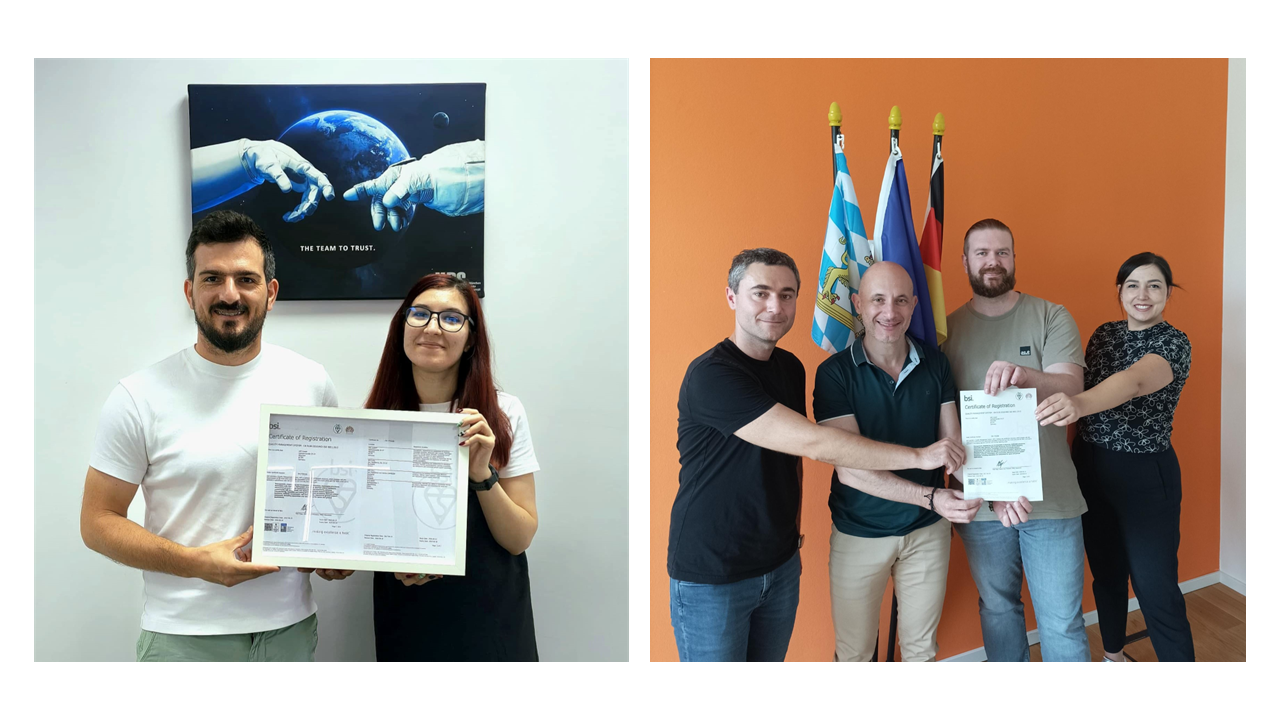
13 years after their initial certification in accordance with the ISO 9100 standard, HPS headquarters in Munich and HPS Bucharest once again rose to the challenge of renewing this seal of trust. The process covered the period from 03/09 until 03/18 2026 and was successfully completed in June.
HPS is fully committed to the seven pillars of the seal, as company CEO Ernst K. Pfeiffer emphasizes: “ISO 9100 confirms our consistent quality, which leads to greater customer satisfaction; standardized processes and proactive risk management to avoid surprises; continuous improvement with demonstrable control of quality and performance; clear structures of responsibility and documentation discipline; and finally, what truly matters at all times: outstanding competitiveness and a deep network with all stakeholders. This ensures that, for our customers around the world, we always are exactly what the HPS slogan promises: The Team to Trust.”
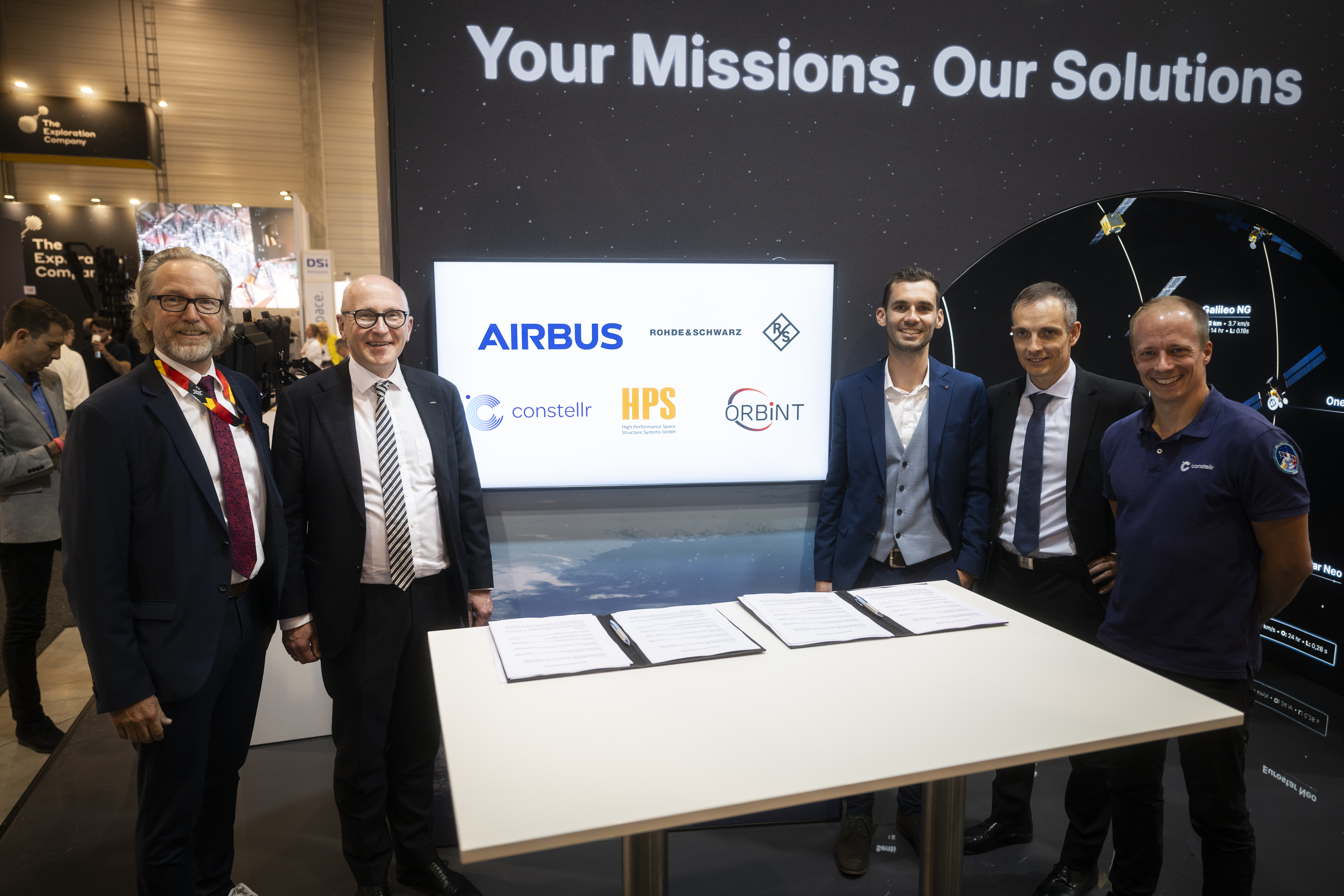
Airbus Defence and Space sovereign space intelligence consortium with Rohde & Schwarz, constellr, Orbint and HPS
June 2026
We are proud to be part of this important collaboration. See below the press release:
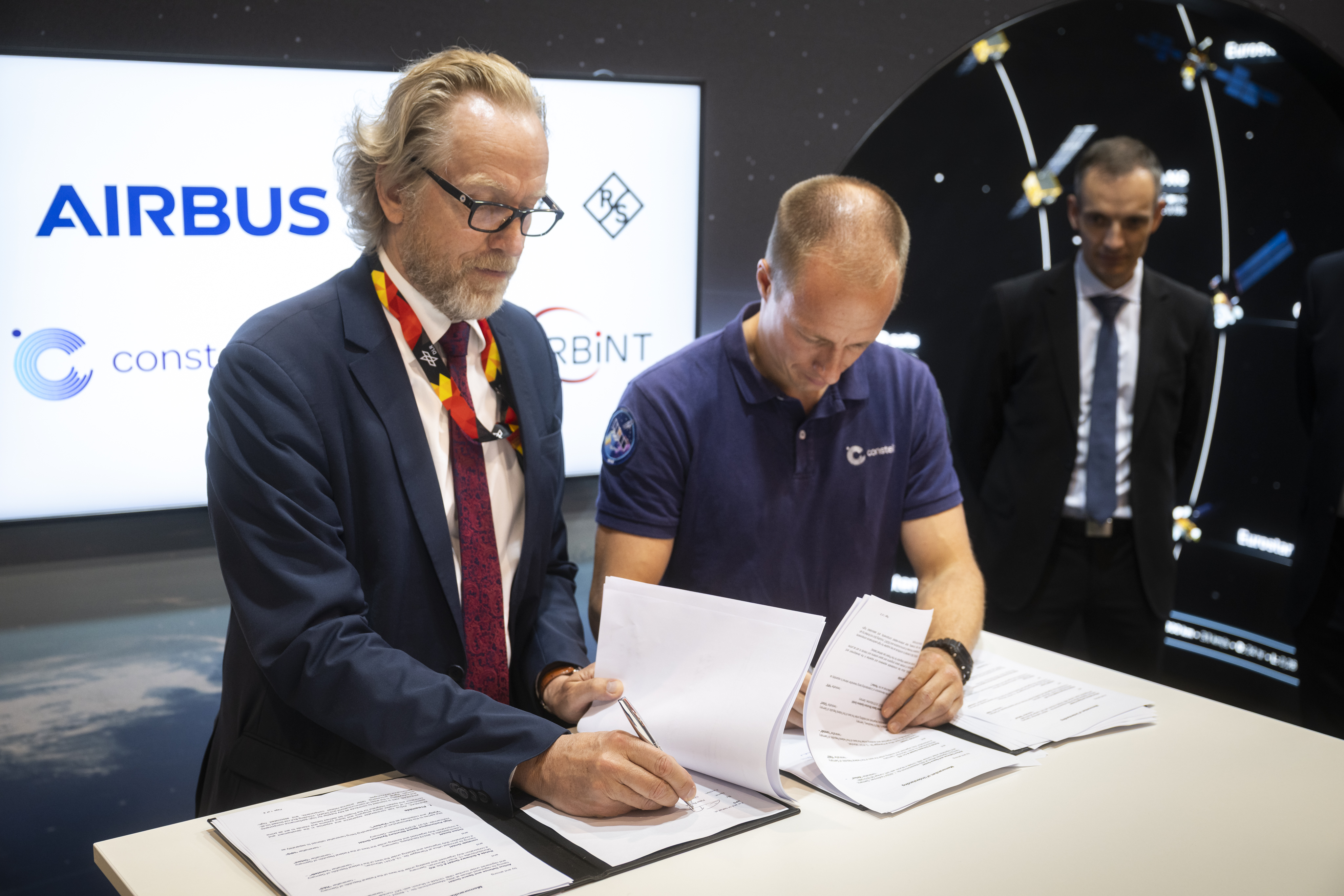
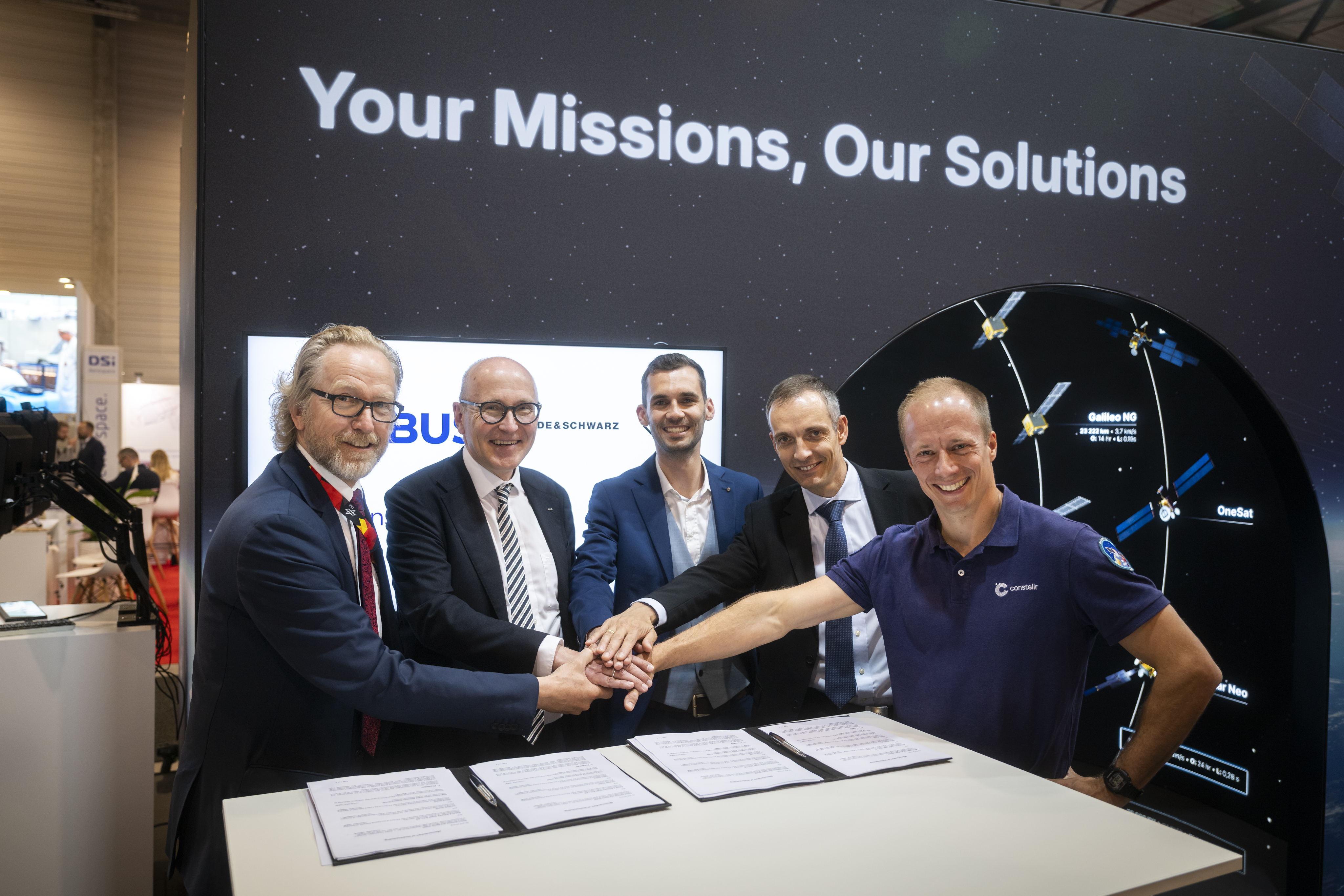
Berlin Air Show, Germany – 10 June 2026 – Airbus Defence and Space has signed a Memorandum of Understanding with Rohde & Schwarz, constellr, Orbint and High Performance Space Structure Systems (HPS) to collaborate on a satellite-based Earth observation and Intelligence, Surveillance, and Reconnaissance (ISR) solution. Led by Airbus as prime contractor and system integrator, the consortium brings together five complementary German specialists to address growing governmental demand for sovereign, end-to-end space-based surveillance capabilities, independent of non-European dependencies.
“Europe has the talent, the technology, and the industrial base to build its own space intelligence infrastructure and the strategic imperative to do so,” said Mike Schöllhorn, CEO of Airbus Defence and Space. “This consortium brings together five German companies whose capabilities are genuinely complementary. Together, we can deliver a sovereign, end-to-end solution that no single company could offer alone.”
Max Gulde, CEO and Co-Founder, constellr: “This is a mission before it is a contract. We are joining this consortium because thermal infrared reconnaissance — the ability to detect operational activity, equipment state, and early-warning indicators that remain invisible to optical and radar sensors — is precisely where the ISR capability gap is greatest. We are proud to contribute that alongside Airbus, and to bring an already operational, sovereign German thermal ISR capability into a programme of this strategic importance.”
Ernst K. Pfeiffer, CEO of HPS GmbH: “It is a very positive sign that German prime contractors like Airbus Defence and Space are already incorporating German supplier SMEs like HPS into their system concepts right from the start. We are technically capable of delivering, extremely agile when it comes to scaling, and, above all, oriented toward the long term. A sovereign space architecture offers sufficient opportunities for the entire German space ecosystem, and the political will can be implemented very effectively. Many thanks to Airbus for his motivation to bring SMEs on board for defense missions.”
The five partners combine complementary capabilities across the full intelligence chain, and proven expertise along every stage of modern Earth observation and ISR. Airbus is responsible for overall mission and system architecture, end-to-end integration, programme management, and the customer interface.
Rohde & Schwarz provides high-performance RF components, signal processing technologies, and radar antenna systems, core competencies developed over decades for the most demanding security applications.
Orbint brings geolocation methods, data processing algorithms, and system concept contributions.
HPS delivers space-qualified special reflector antennas optimised for high-frequency Earth observation and communication payloads.
Constellr contributes thermal infrared satellite systems based on both its current and next-generation platforms, supporting initial and full operational capability.
The joint solution addresses the full Earth observation chain, covering multi-sensor tasking, collection, processing, exploitation and dissemination. It integrates electro-optical and infrared (EO/IR), synthetic aperture radar (SAR)-derived products, and signal-related geospatial intelligence outputs into coherent, customer-ready services.
The consortium’s formation reflects a growing recognition across European governments and defence institutions that strategic autonomy requires indigenous space intelligence capabilities. With all five companies headquartered in Germany, the partnership represents a concentrated national industrial response to that demand and a concrete step towards a European sovereign ISR architecture.
The parties have started their collaboration on a non-exclusive basis.
Pictures: Copyright Airbus Defence and Space
Contacts for the media:
Ralph HEINRICH
Airbus Defence and Space
+49 (0)171 30 49 751
ralph.heinrich@airbus.com
Jeremy CLOSE
Airbus Defence and Space
+44 776 653 6572
jeremy.close@airbus.com
Guardian Angel VIGIL in Space – For the Safety of Earth
VIGIL Antenna ordered to HPS: Safeguarding Data from Space
June 2026
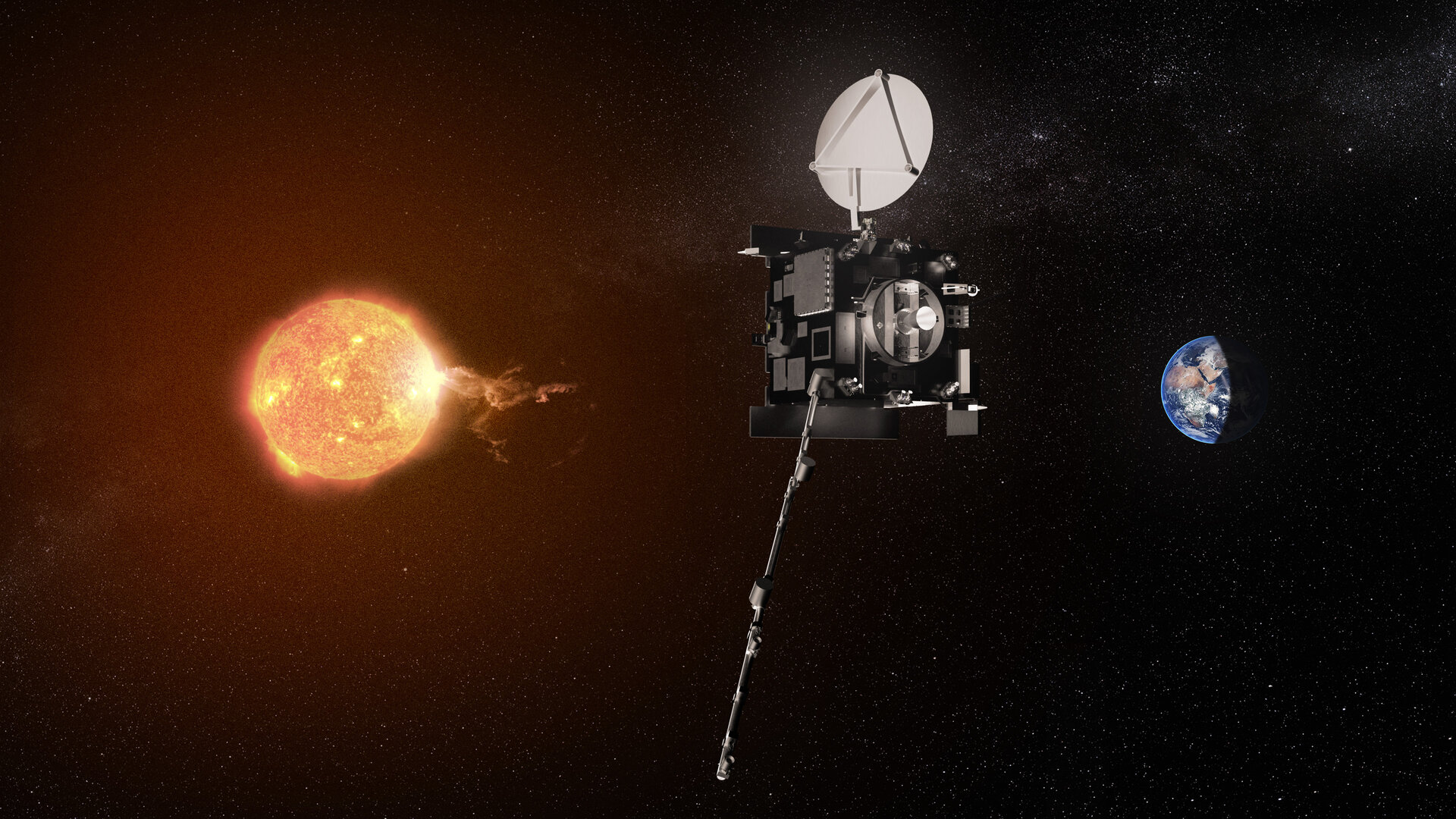
Modern technology underpins complex fields such as energy systems, telecommunications, navigation, and satellite operations in our society. However, their security is fragile and constantly threatened by the relentless streams of particles and magnetic fields emitted by the Sun. While humans cannot influence these natural forces directly, we can defend against them: with a guardian angel in space that provides timely warnings and enables long-term forecasts. This is precisely what VIGIL is – the iconic ESA mission aimed at establishing a globally effective early warning system from a stable vantage point in space at Lagrange Point L5, located about sixty degrees behind Earth on its orbit around the Sun.
From this side-on perspective, VIGIL can assess the spread of coronal mass ejections (CMEs) along the Sun–Earth line much more accurately: speed, direction, and probable impact geometry become clearer. Additionally, active regions on the Sun can be identified earlier before they rotate into the “geo-effective” side as seen from Earth. Both aspects are crucial for issuing warnings not only earlier but, above all, with greater precision. In practice, this means that operators of critical systems receive a more robust basis for decision-making – granting them more time to initiate protective measures and, thanks to improved data, reducing unnecessary interventions in cases of false alarms.
The mission and observation technology of Earth’s new guardian angel is made in Europe, and its ability to reliably transmit observations over a distance of 1.5 million kilometres to ground stations on Earth comes from Bavaria, courtesy of the medium-sized Munich antenna specialist HPS. What makes the HPS antenna special? A 2-metre reflector diameter, extremely lightweight and dimensionally stable thanks to advanced carbon technology, ensures reliable data transmission in the X-band. Safely stowed for launch, the folded antenna allows both satellite and antenna to fit into the rocket.
For the demanding task of developing and custom-manufacturing this mission-critical piece of high-tech equipment, the schedule is marked by tight milestones leading up to delivery in early 2029. The contract has a seven-figure financial volume and is being realised by a specially assembled team of nearly ten engineers and technicians from HPS’s Munich headquarters, together with subcontractors INVENT GmbH (Braunschweig) and HPS-Romania (Bucharest).
The antenna contract signed by HPS end May 2026 with the customer and satellite prime Airbus-UK marks another milestone in HPS’s growth trajectory, paved both by high-performance ClassicSpace products such as the VIGIL antenna and by serialised products like small broadband-antennas or deorbit sail modules. Furthermore, the contract demonstrates a special programmatic ESA success: “Barely 6 months after the ESA Ministerial Council 2025, we can present the VIGIL antenna contract as a success story to decision-makers in Bavaria and Berlin, showing that German SME technology can make a significant contribution to global security-relevant missions. Many thanks, of course, to ESA and Airbus for their trust in our abilities, especially to BMFTR Minister Dorothee Bär, DLR Director Walther Pelzer, and the Bavarian Ministry for Economic Affairs led by Minister Hubert Aiwanger and State Secretary Tobias Gotthardt for their efforts in putting together the CM25-budget, including additional support for VIGIL from the Ministry of Defence BMVg,” says HPS CEO Dr.-Ing. Ernst K. Pfeiffer.
HPS supplies the antenna for Europe’s second iconic asteroid mission
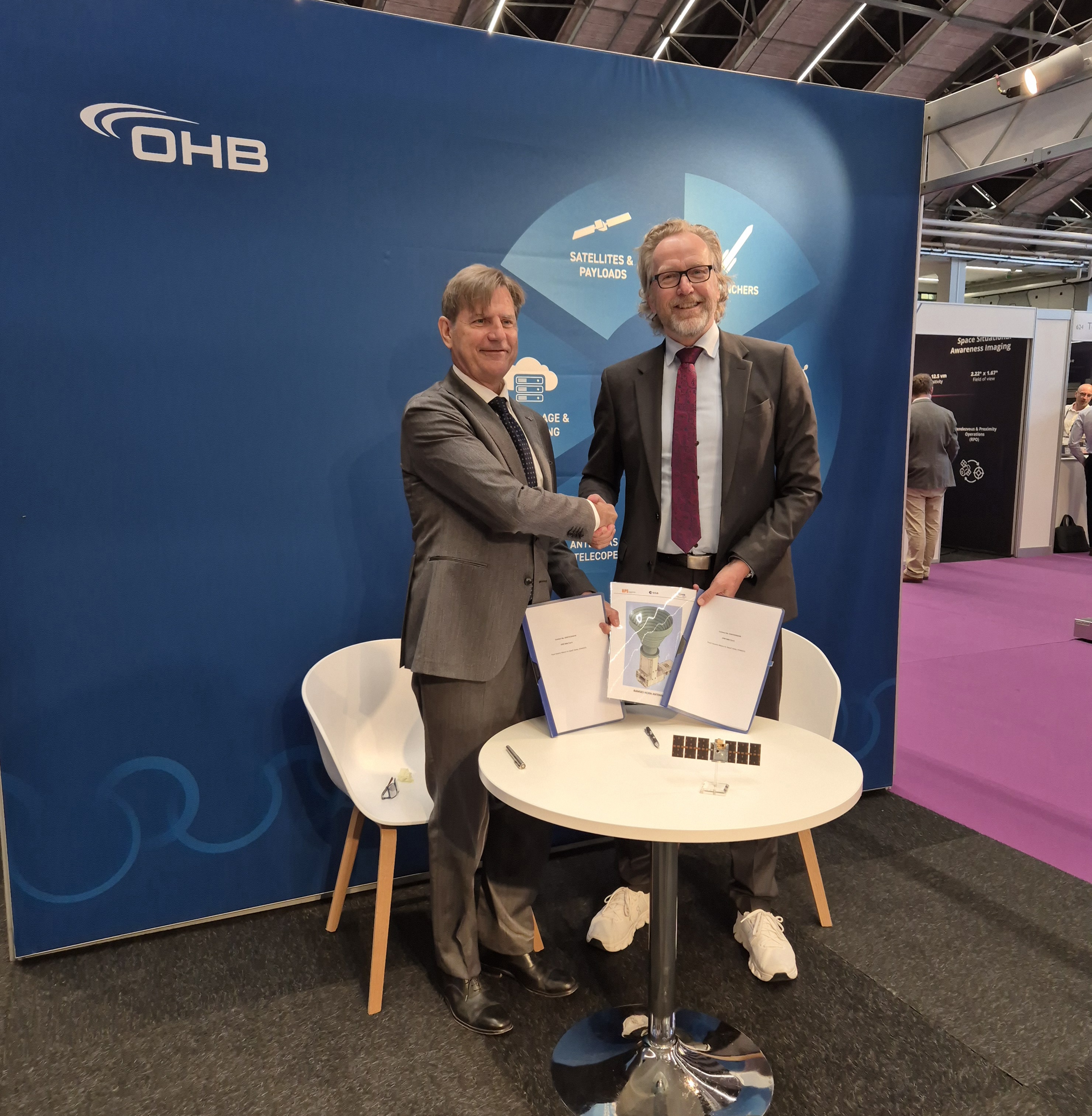
Contract Signature between OHB-IT and HPS-DE on-site SmallSat Europe Conference on May 26.
May 2026
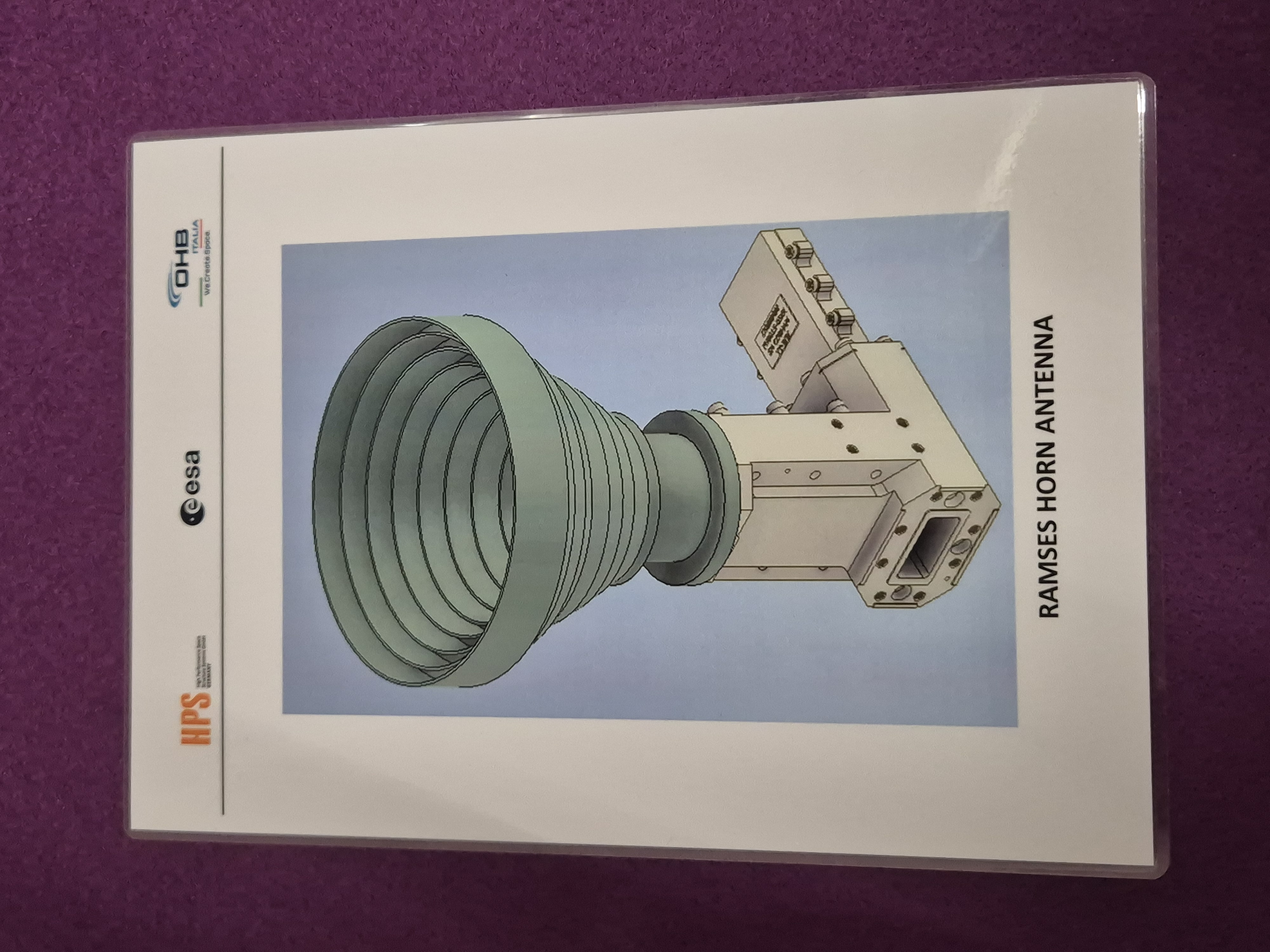
Friday, 13th of April 2029: Traveling at 45,080 km/h, the approximately 350-meter-long asteroid Apophis — named after the god of destruction — will race out of the depths of its orbit and pass Earth at a distance of just 32,000 kilometers, close enough for people on Earth to witness this near-miss. Much closer still, however, will be ESA’s asteroid hunter Ramses (Rapid Apophis Mission for Space Safety), a spacecraft built by OHB Italia and tasked with studying this unusually large primordial remnant of galactic evolution in situ. Of particular scientific interest is the opportunity to observe the behavior of its surface and internal layers, and above all to document the asteroid’s response to Earth’s immense gravitational forces.
For this mission, the spacecraft’s antenna is of central importance. It is the communications lifeline between the events unfolding live in space and the scientists in Germany, across Europe, and in Japan monitoring the mission from Earth. As with the already operational HERA mission, Munich-based antenna specialist HPS GmbH has been selected for this role.
HPS’s X-band module is a custom-designed horn antenna made from a high-strength yet lightweight aluminum alloy, offering excellent radiation and gain characteristics. For HPS, drawing on experience from major antenna projects such as the Euclid mission (ESA, with TAS-Spain as direct customer), Heinrich Hertz (DLR, with TESAT/OHB as direct customer) and HERA (ESA, with OHB-Bremen as direct customer), this antenna falls within a well-established field of technology.
With the contract now in place and the antenna concept defined during the preliminary phases, the industrial partners are moving into the detailed design and manufacturing of the Ramses flight hardware. Next year, these components will undergo environmental and functional testing to ensure they are fit for launch and for operation in deep space.
Ramses is scheduled to launch as early as spring 2028 and reach Apophis in time for its April 2029 flyby, enabling scientists to observe the asteroid before, during, and after the event. This ESA mission supports the core objectives of the Space Safety Programme by improving knowledge of how near-Earth objects behave under external influences and by further developing strategies to defend against potentially hazardous asteroids.
On Tuesday, May 26, Roberto Aceti (CEO OHB-Italia) and Ernst K. Pfeiffer (CEO HPS GmbH, Germany) celebrated the contract signature on-site the SmallSat Europe Conference in Amsterdam (NL).
Ernst K. Pfeiffer commented: “It is fantastic to be part of this exceptional mission, and it is an honor that our antenna will transmit these highly fascinating data back to Earth. Images of the asteroid — perhaps even with Earth in the background — will be seen around the world. It is great that Germany decided to participate in this mission at the CM25 conference in November, as this now enables SMEs to contribute their high-tech capabilities as well. I am pleased to further expand now our cooperation with the prime contractor OHB Italia.”
Roberto Aceti, CEO of OHB Italia, commented: “This contract further consolidates the cooperation between OHB Italia and HPS GmbH on advanced space systems. The Medium Gain Antenna is an important element of the RAMSES mission communication chain and its development reflects the value of specialized European industrial capabilities in support of complex exploration missions.”
HPS S.R.L. Delivers MGSE Reflector Transport Container for the CIMR Mission
May 2026
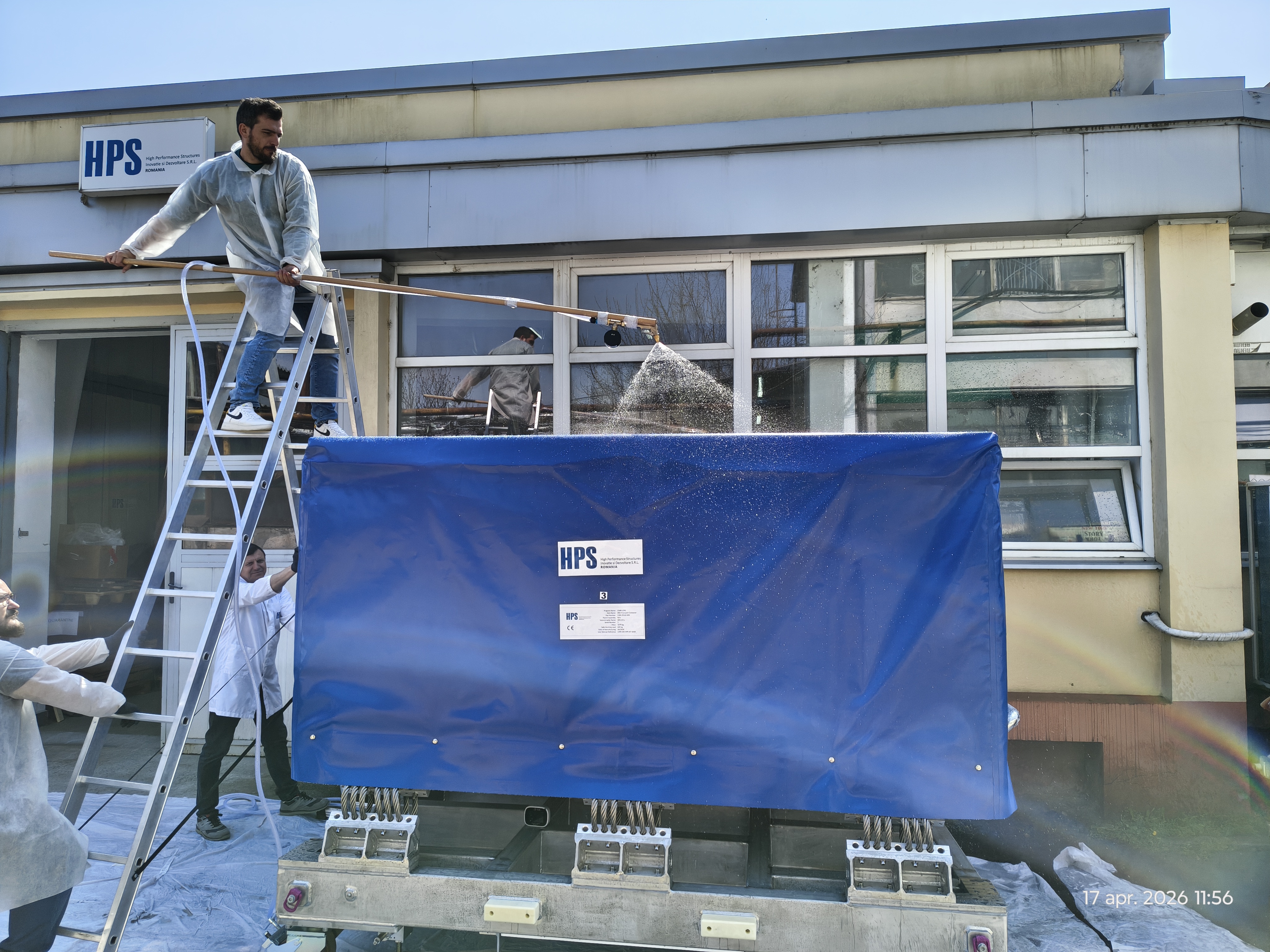
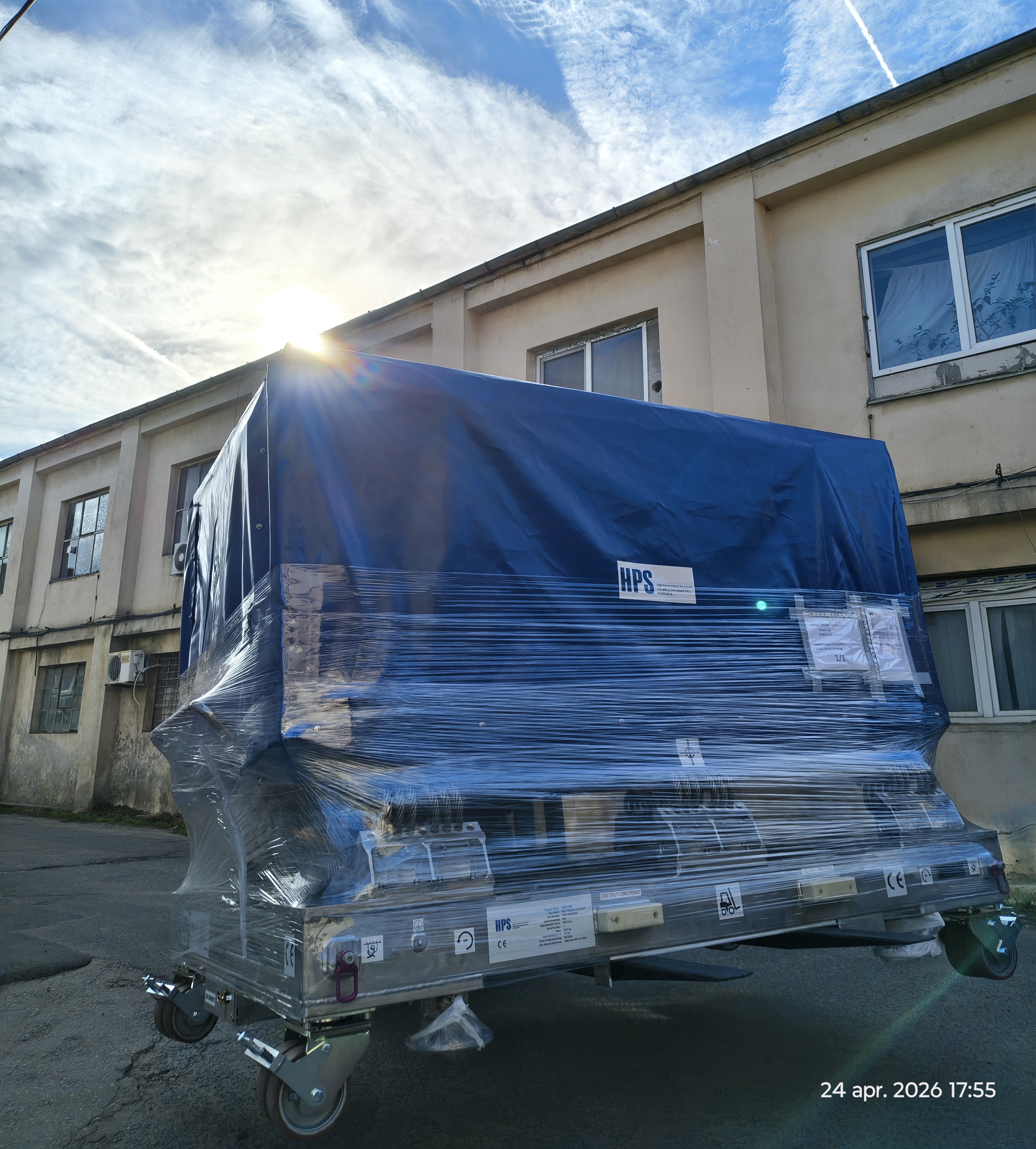
HPS S.R.L. Bucharest, Romania has delivered a large transport container measuring 3×2.1×2.2 meters (length, width, height for the Deployable Reflector Assembly (DRA) to Germany on schedule. This specially engineered container is a key component for the Large Deployable Reflector Subsystem (LDRS) of the CIMR mission within the Copernicus programme, Europe’s leading Earth observation initiative, and protects the sensitive deployable reflector in its stowed configuration during transfers between integration at DRA-responsible and HPS’s partner Large Space Structures GmbH (LSS) and test centres.
Functioning as a “mobile cleanroom”, the transport container combines advanced engineering with cutting-edge materials technology. With a net weight of 1,662 kg and a robust construction of anodised aluminium and passivated stainless steel, it meets the highest standards for durability and cleanliness. Six high-performance cable spring isolators act as a dual spring damping system, providing optimal protection against vibrations and shocks, ensuring the reflector remains in a controlled environment. Complete traceability of all parts and compliance with ECSS quality standards guarantee maximum safety and technical excellence. The DRA-container-subproject required coordination with 36 international suppliers and the integration of 1,959 component references. Even individual parts weighing up to 551 kg were handled with precision to meet complex requirements. In a zero-defect environment, HPS-RO succeeded in delivering the MGSE punctually before first transport operations, despite major logistical challenges.
To ensure the reflector’s safety, the container underwent a comprehensive qualification campaign, including dimensional and weight checks, functional and handling inspections, load tests, drop tests for shock absorption, rain tests for hermetic sealing, and verification of electrical conductivity. Additionally, ten precision-engineered MGSE vibration adapters were supplied for the qualification of the DRA. These adapters enable demanding shaker tests to simulate the stresses of a rocket launch, transferring extreme mechanical loads and delivering high-quality test data.
HPS-Romania has been contracted by HPS GmbH, Germany (prime contractor to TAS-IT for the whole LDRS-subsystem) for the whole handling and vibration test MGSE (Mechanical Ground Support Equipment) of all LDRS-subassemblies (arm, reflector, subsystem).
Through technical excellence and flawless supply chain management, the dedicated HPS-RO team ensured that both the transport container and the vibration adapters met the stringent requirements of the mission, making indirectly a significant contribution to European environmental monitoring.
SWISSto12 Partners With German Consortium HPS/LSS on First-Ever Unfurling Antenna Reflector to Be Built in Europe for Commercial GEO Telecommunications Satellite
Renens, Switzerland, May 5 2026
Latest contract awarded signals strong momentum in SWISSto12’s strategy to strengthen European capabilities to build end-to-end space systems

SWISSto12 announced today a major contract with German high-performance space subsystem providers HPS/LSS. The Munich-based consortium will provide a large deployable reflector subsystem (LDRS) for the NEASTAR-1 mission, built on HummingSat, enabling the world’s first direct-to-device media broadcasting capabilities from geostationary orbit.
The German-led antenna reflector subsystem is the result of more than 15 years of development under the European Space Agency’s (ESA) Advanced Research in Telecommunications (ARTES) programme, ESA’s Earth Observation Technology Development activities, and the EU’s Horizon 2020 programme. The contract for the NEASTAR-1-LDRS is co-funded by ESA, with core funding from the German Space Agency within the German Aerospace Centre (DLR), and further contributions from additional ESA Member States.
Since the inception of the HummingSat programme, SWISSto12 has developed a large industrial footprint in Germany; this latest contract further strengthens the German partnership and contribution to HummingSat. In the context of future cooperation, the company is positioning its small geostationary satellite and advanced multi-orbit payload technologies as a strong technical and strategic fit with the German Federal Government’s Space Strategy, in particular, with its priorities around secure communications.
The HPS/LSS consortium joins a growing network of German supply chain partners, which includes ASP, AST, DLR, Tesat, Thales Germany, Jena Optronik, and Rockwell Collins Germany. The ecosystem reflects an increasingly confident space posture, whereby European satellite companies are selected to build advanced systems for European customers – both commercial and government.
Emile de Rijk, CEO and Founder, SWISSto12: “Collaboration with HPS/LSS was fast and effective from the first day. We value their culture of precision engineering, deep-tech innovation, and commitment to excellence along with a drive for fast and efficient execution. They have demonstrated a strong technical heritage and proven track record in building LDRS, notably for ESA missions, underscoring the progress of ESA and DLR’s vision to develop resilient, sovereign space capabilities.”
Ernst K. Pfeiffer, CEO, HPS GmbH: “In addition to the successful signing of another major HPS/LSS contract, we are proud to contribute to European technological sovereignty through this Swiss‑German collaboration; we are delivering tangible business results just four months after German ESA‑CM25 decisions were made.”
Leri Datashvili, Co‑CEO & Founder, LSS GmbH: “LSS, together with HPS, is proud to pioneer LDRS technology in Europe for applications in communications, reconnaissance, and observation. Thanks to the trust of commercial customers, the German Space Agency, and ESA, we are now delivering this strategic European product to global programmes.”
Laurent Jaffart, Director of Resilience, Navigation and Connectivity at ESA, said: “ESA’s long-term investment in innovation and partnerships enable cutting-edge technologies to be brought to market, crucially boosting Europe’s global competitiveness, while strengthening autonomy and resilience. By leveraging Europe’s industrial excellence within two of our key Member States, this contract is a prime example of how strong collaboration will be translated into advancing the next-generation of connectivity – particularly within the direct-to-device domain.”
About SWISSto12
SWISSto12 is a leading enabler of the new space economy, leveraging patented manufacturing and design technologies, such as 3D-printing, to manufacture disruptive payloads. These can be hosted on any platform, for any mission, in any orbit—either on a third-party satellite or on its proprietary compact, geostationary satellite, the HummingSat. The company, founded in 2011, is currently delivering seven HummingSat GEO platforms to global operators, reached CHF110 million in revenue in 2025, and has delivered 110% CAGR since 2022. The HummingSat is an ESA Partnership Project. For more information, please visit: https://www.swissto12.ch.
About HPS/LSS Partnership Consortium
High Performance Space Structure Systems GmbH (HPS), founded in 2000, and Large Space Structures GmbH (LSS), founded in 2012, are successful, independent, and continuously growing SMEs. The Large Deployable Reflector Subsystem (LDRS) for NeaStar-1 will be a 5 m diameter antenna reflector (working in L-band) including deployment arm and several reflector/arm-associated subassemblies. HPS/LSS are currently also developing, amongst others, an 8 m LDRS for ESA/EU’s Copernicus Imaging Microwave Radiometer Mission for frequency bands up to Ka-band. For more information, please visit: https://www.hps-gmbh.com/ and https://www.largespace.de/
About the European Space Agency
The European Space Agency (ESA) provides Europe’s gateway to space.
ESA is an intergovernmental organisation, created in 1975, with the mission to shape the development of Europe’s space capability and ensure that investment in space delivers benefits to the citizens of Europe and the world.
ESA has 23 Member States: Austria, Belgium, Czechia, Denmark, Estonia, Finland, France, Germany, Greece, Hungary, Ireland, Italy, Luxembourg, the Netherlands, Norway, Poland, Portugal, Romania, Slovenia, Spain, Sweden, Switzerland and the United Kingdom. Latvia, Lithuania, Slovakia and the Republic of Cyprus are Associate Members.
ESA has established formal cooperation with four Member States of the EU. Canada takes part in some ESA programmes under a Cooperation Agreement.
By coordinating the financial and intellectual resources of its members, ESA can undertake programmes and activities far beyond the scope of any single European country. It is working in particular with the EU on implementing the Galileo and Copernicus programmes as well as with Eumetsat for the development of meteorological missions.
Learn more at www.esa.int and www.swissto12.com
Development of the Compact Foldable Backpack Antenna by HPS Enters Final Phase with DLR Space Innovation Hub
März 2026
2016. The world of satellite communications is small, manageable, and mainly revolves around geostationary positions 36,000 kilometres above the Earth and enormous, permanently installed ground receiving stations. Only a handful of satellites for satellite telephony and navigation orbit in lower altitudes, tracing solitary paths above us.
During this period of apparent stagnation, HPS, the specialist in satellite communication antenna technology based in Munich, began developing a product far ahead of its time: KEAN, the compact, foldable backpack antenna for communication from anywhere in the world via satellite. The users: highly mobile units of both civil and governmental origin, as well as private sector stakeholders such as expedition leaders or correspondents for internationally operating media.
Over several phases, and with support from the ESA ARTES programme and the national DLR space programme, HPS, together with partners MTEX and BLACKWAVE, the Technical University of Munich and the University of the Bundeswehr Munich, developed a laboratory prototype with the following requirements:
Ultimately, the laboratory prototype in its KEAN II (Second Generation) version proved itself in rigorous link tests at the University of the Bundeswehr Munich, in connection tests with the German SatCom satellite Heinrich Hertz, as well as in handling tests in the field. As a result, the project’s goal is now within reach: the development of a prototype as a complete system for mobile, bidirectional satellite communication.
2026: In a final development step from KEAN II to KEAN III, further optimisation steps will now follow, which will ultimately establish the product’s suitability for series production. These range from design optimisation and further weight reduction to increased manufacturing precision for both individual pieces and series production, particularly in lightweight composite slats, as well as the complete combination and integration of modern and robust electronic components (modem, converter, amplifier), culminating in standardised acceptance tests for function and performance. These final improvements prior to product launch were commissioned on 21 April 2026 by the Space Innovation Hub funding programme of the German Aerospace Agency (DLR) and are to be completed within roughly 15 months with the delivery of a complete system for a final practical test by police special forces.
HPS CEO Ernst K. Pfeiffer: “We are especially proud that, with our innovation KEAN, one of the first contracts in what is expected to be a long list of upcoming development and delivery tasks was established through the new Space Innovation Hub funding programme of DLR with our company HPS. After many years of forward-thinking planning and patient, continuous improvements, we will be in a position in 2027 to serve the market for governmental and civil satellite communications with a perfect product just as the first major wave of demand begins. We thank the BMFTR in Berlin, the DLR Space Agency in Bonn, and the University of the Bundeswehr Munich for their support on our path to success.”
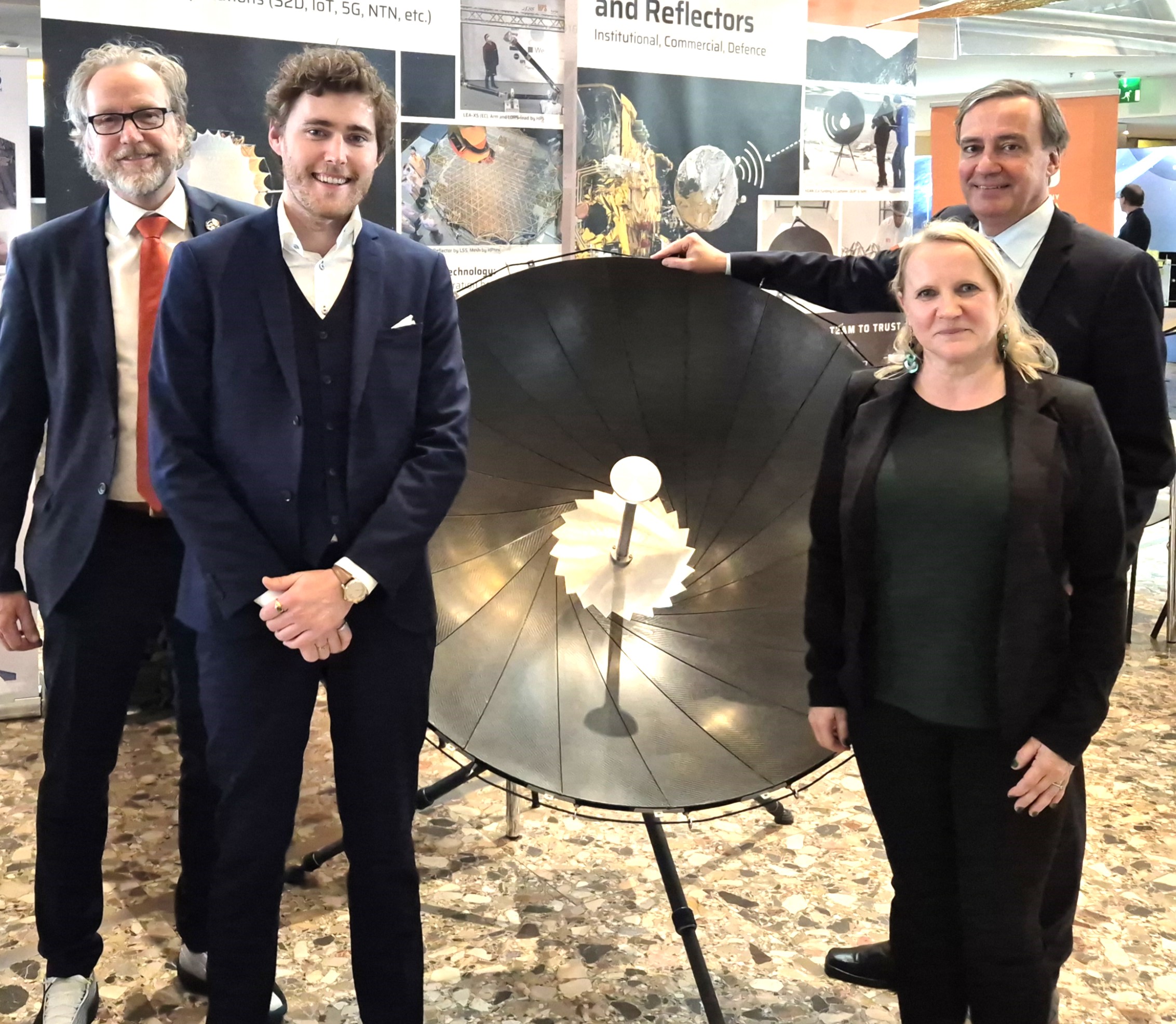

Innovative Satellite Technology from OHB with Thermal Protection made by HPS
March 2026
Three inconspicuous letters stand for technological capabilities without which modern life would come to a standstill: PNT – Positioning, Navigation, Timing. These are abilities that must be constantly developed and optimised. Under the project name “LEO-PNT”, the OHB Group (Germany) together with GMV (Spain) are acting jointly for a demonstration mission in low Earth orbit (LEO) with four new satellites. The aim of this in-orbit demonstration is to test various technical parameters and incorporate the insights gained into a comprehensive LEO-PNT constellation. The innovative LEO-PNT payloads act as amplifiers between the high-flying Galileo satellites and users on Earth. In doing so, they not only optimise existing signals but also expand the range of navigation signals with new frequency bands, signal structures and content. Germany and Spain have been the most important signatories on the ESA Ministerial Conference in November 2025, followed by Italy.
In order to operate reliably under the extreme conditions of space, the four satellites — each about the size of a washing machine-dryer combination — are protected against cold and heat by a multi-layer insulation (MLI). The German specialist HPS GmbH has been commissioned with the design, manufacturing and integration of this insulation. In addition to thermal protection, further safety measures are employed: an ITO coating protects against atomic oxygen (ATOX), while a single layer insulation (SLI) serves as ESD (electrostatic discharge) protection for the solar panels.
HPS is regarded across Europe as a key supplier of thermal hardware in the field of navigation and communication for small satellites, as well as for scientific instruments. The company not only equips now the LEO-PNT satellites, HPS, in collaboration with OHB, was already responsible for the delivery of the MLI on Flight Model 3 of last year’s HIVE project. This close partnership is a clear evidence of the trust placed by the leading German space company OHB in the expertise of HPS, and underscores the strategic importance of strong, SME-based supply chains within the European space industry.
Note: HPS also delivered four of its “ADEO-N” deorbit dragsail modules for the first four LEO-PNT satellites at the end of last year. “To avoid space debris, the design of the LEO-PNT satellites was created to exceed current standards: With the help of their propulsion system and a sail, the satellites will actively leave their orbit shortly after the end of their mission, descend, and eventually burn up in the Earth’s atmosphere.” [Quote BDLI]
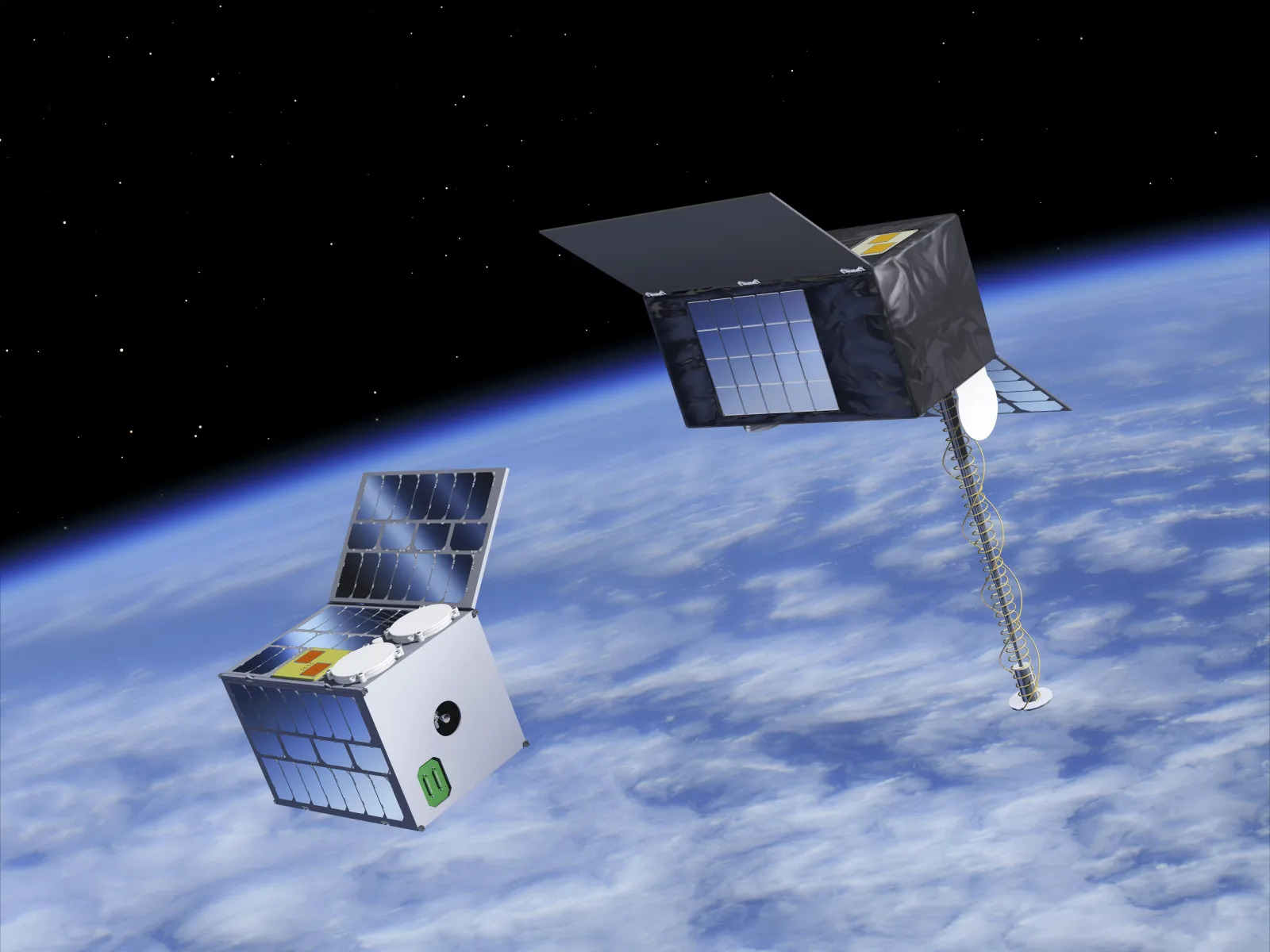
Federal Minister Visits Joint Venture HPtex
February 2026
Münchberg, Upper Franconia – The Bavarian-based joint venture HPtex GmbH, founded by HPS High Performance Space Structure Systems GmbH and IPROTEX GmbH & Co. KG, recently welcomed high-ranking political guests to its production site in Münchberg.
We felt honored to welcome the German Minister for Science Technology and Space, Mrs. Dorothee Bär, who came to learn more about the innovative space mesh technologies developed and produced at HPtex. She was accompanied by several regional political representatives, including Member of Parliament MdB Mr. Heiko Hain, District Administrator for Hof, Mr. Oliver Bär, Münchberg mayoral candidate Mr. Thomas Schnurrer, as well as additional local council candidates of CSU. The visit was also attended by numerous citizens from Münchberg.
A special highlight of the gathering was the participation of Prof. Dr.-Ing. Frank Ficker, who played a key role in initiating the early research collaboration on metallic space meshes approximately ten years ago at the Fraunhofer Institute in Münchberg. The event also brought together leading representatives from the joint venture partners, including Timo Piwonski, Managing Director of IPROTEX, and Peter Rauhut, CEO of HPtex and CFO of HPS.
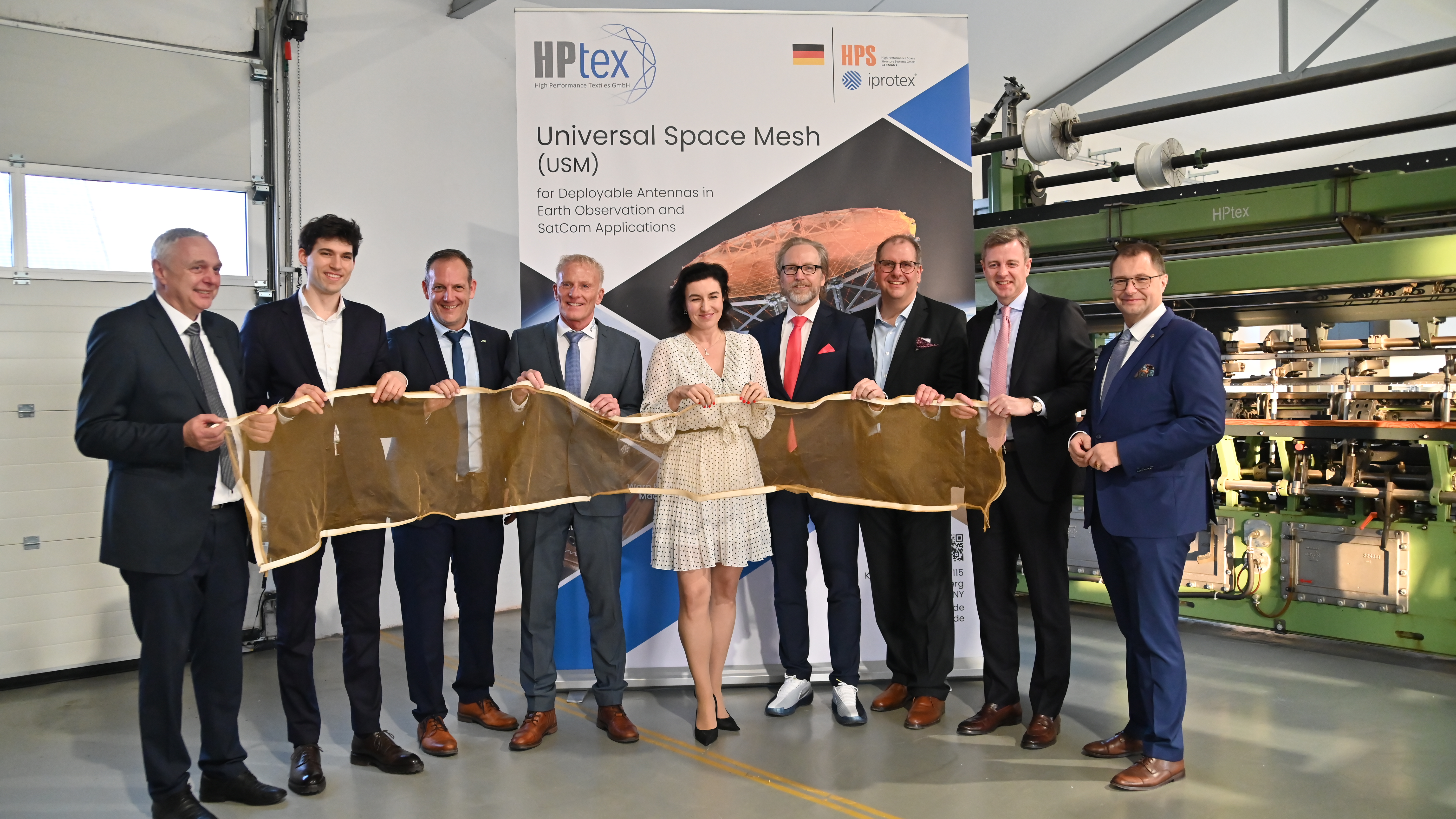
Space Mesh Technology with ESA Heritage:
The ultra-fine metallic meshes developed at HPtex represent a technological success story emerging from several technology programs of the European Space Agency, including TRP, GSTP, ARTES, and Earth Observation (EO) initiatives.
These high-precision meshes combine electrical conductivity with mechanical flexibility and are already being used in advanced space systems such as small deployable antennas and Large Deployable Reflector Subsystems (LDRS). One prominent example is the mesh-application onboard the Copernicus CIMR Mission, which will provide crucial observations for the study of Earth’s polar regions.
Event Program:
The visit program included a welcoming reception at the facility entrance, followed by a standing panel discussion in the preparation hall. Guests had the opportunity to explore various exhibition pieces presented by HPtex, IPROTEX, the Fraunhofer Institute, and fashion designer Laura Theiss.
A dedicated tour of the new mesh production hall provided insight into the highly specialized manufacturing processes used to produce these advanced materials. The program concluded with a group photo and numerous opportunities for discussion, including exchanges between Minister Doro Bär and HPS CEO Dr.-Ing. Ernst K. Pfeiffer.
A Decade of Development in Münchberg:
The roots of HPS’s activities in Münchberg go back around ten years, when the company began collaborating with the Fraunhofer Institute and Professor Ficker on metallic mesh technologies. Building on this cooperation, HPtex GmbH was founded in February 2020 as a joint venture between HPS and IPROTEX.
Today, HPtex has established itself as a globally recognized specialist in high-precision space meshes, supplying the so-called “Universal Space Mesh USM) to customers in Europe, Asia, and the United States. Further product developments beyond mesh technologies are already being explored for the future.
The local newspaper Frankenpost also reported on the visit under the headline “Münchberg bringt Textil ins Weltall” (“Münchberg brings textiles into space”).
HPS and HPtex would like to thank all colleagues and partners involved for the excellent preparation and successful realization of this event.
Two Antenna Reflector Assemblies for LUNAR-GATEWAY
January 2026
Following the completion of manufacturing for all components, HPS GmbH, Germany, successfully concluded the assembly and alignment activities of both models of the Antenna Reflector Assembly (ARA), developed as part of the Ka-Band Steerable Antenna (SKBA) for the LUNAR LINK SYSTEM. Lunar Link is European Space Agency’s advanced telecommunications infrastructure for NASA’s Lunar Gateway, designed to provide critical radio-frequency (RF) communication between the orbiting station and assets operating on and around the Moon, such as rovers, landers, and satellites. The system supports high-data-rate services, including live video transmission. Installed on the Habitation and Logistics Outpost (HALO), Lunar Link incorporates dedicated computers, radios, and antennas, serving as a key communications hub for the Artemis program’s lunar operations.
The main reflector, with a diameter of 1.25 m, was manufactured by machining a single aluminum-alloy block with an initial mass of approximately 1.3 tons, resulting in a final component weighing less than 10 kg. Multiple thermal stabilization steps were introduced during the machining process to relieve internal stresses, ensuring dimensional accuracy, geometric stability, and compliance with tight tolerances both during and after machining.
The alignment activities at HPS’s large new integration hall in Oberhaching (south of Munich, 20 min. by car from HPS Offices) were carried out using HPS’s high-accuracy, contactless laser-radar measurement system, employed to determine the relative position and orientation of the two reflectors (main and sub-reflector). The position of the sub-reflector was precisely adjusted using custom-designed support equipment. The achieved results are well within the stringent requirements defined by our customer chain Sener (Spain), ThalesAleniaSpace (France) and ESA/ESTEC (Netherlands), namely antenna component translations within a sphere of 0.06 mm radius and rotations within a 0.02-degree half-cone angle.
Both reflector assemblies are now safely packed in their respective transport containers and are ready for shipment to our direct customer in Spain.
The budget for the project was initiated already on ESA Ministerial Conference 2019, where Germany has committed for a certain SME-share to the construction of the Lunar Gateway. HPS received the contract for the Antenna Reflector Assembly in 2021. HPS CEO: “To be part of this outstanding international GATEWAY-Program makes us very proud. GATEWAY is another positive example for global collaboration supporting peace on Earth. We hope that we as SME can contribute with further equipment in the frame of robotics on and population of the moon.”
