Airbus Defence and Space sovereign space intelligence consortium with Rohde & Schwarz, constellr, Orbint and HPS
June 2026







Airbus Defence and Space sovereign space intelligence consortium with Rohde & Schwarz, constellr, Orbint and HPS
June 2026
We are proud to be part of this important collaboration. See below the press release:
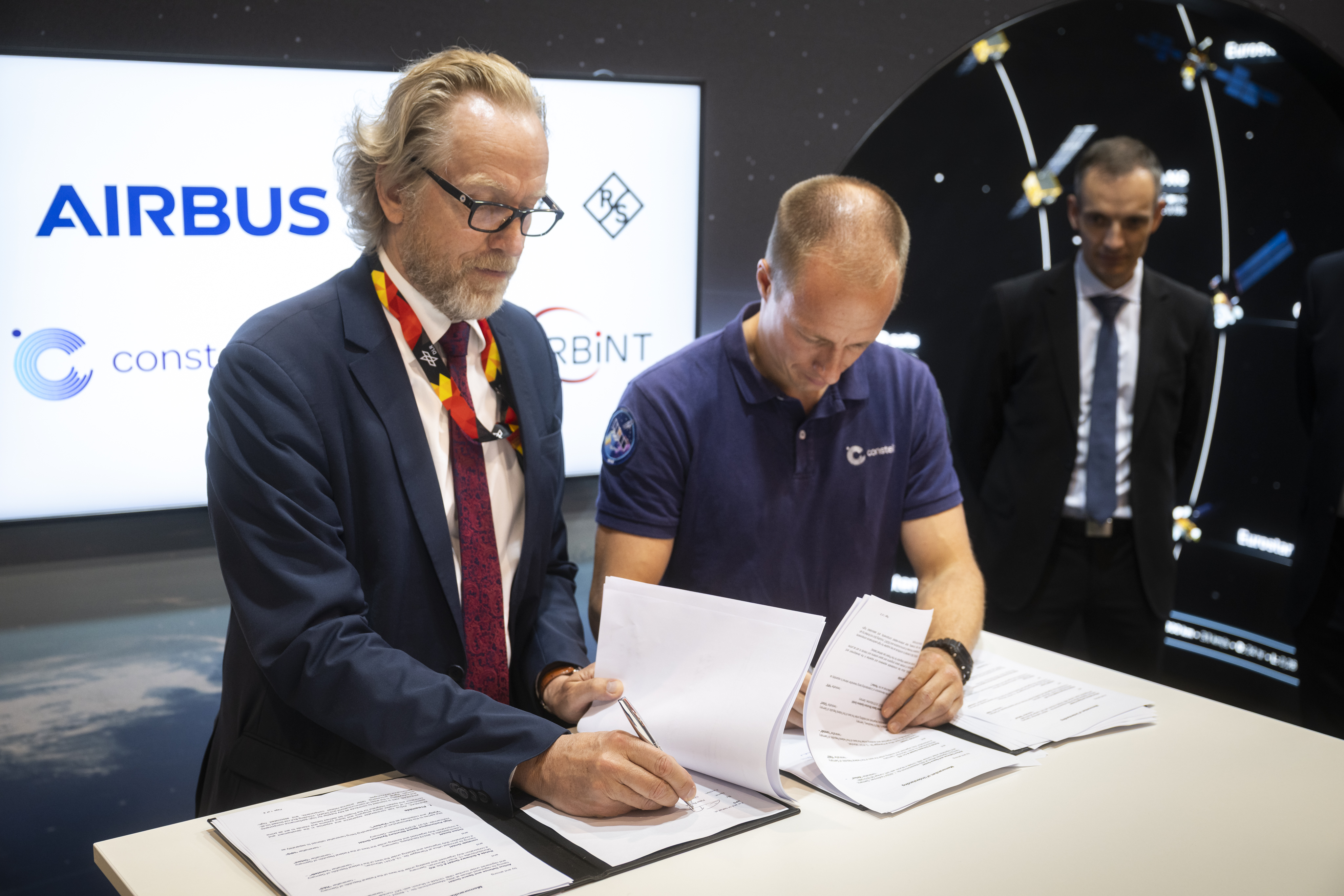
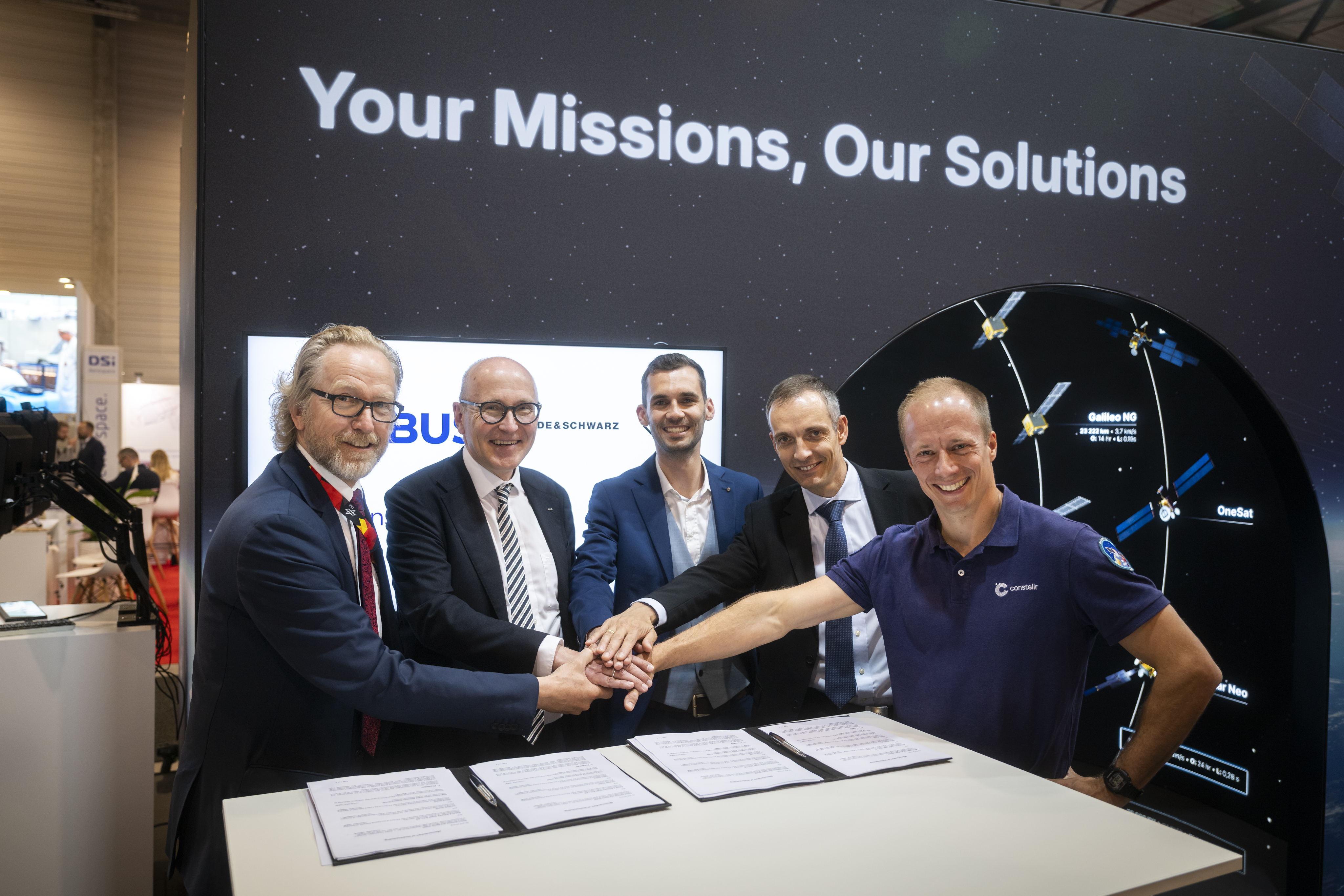
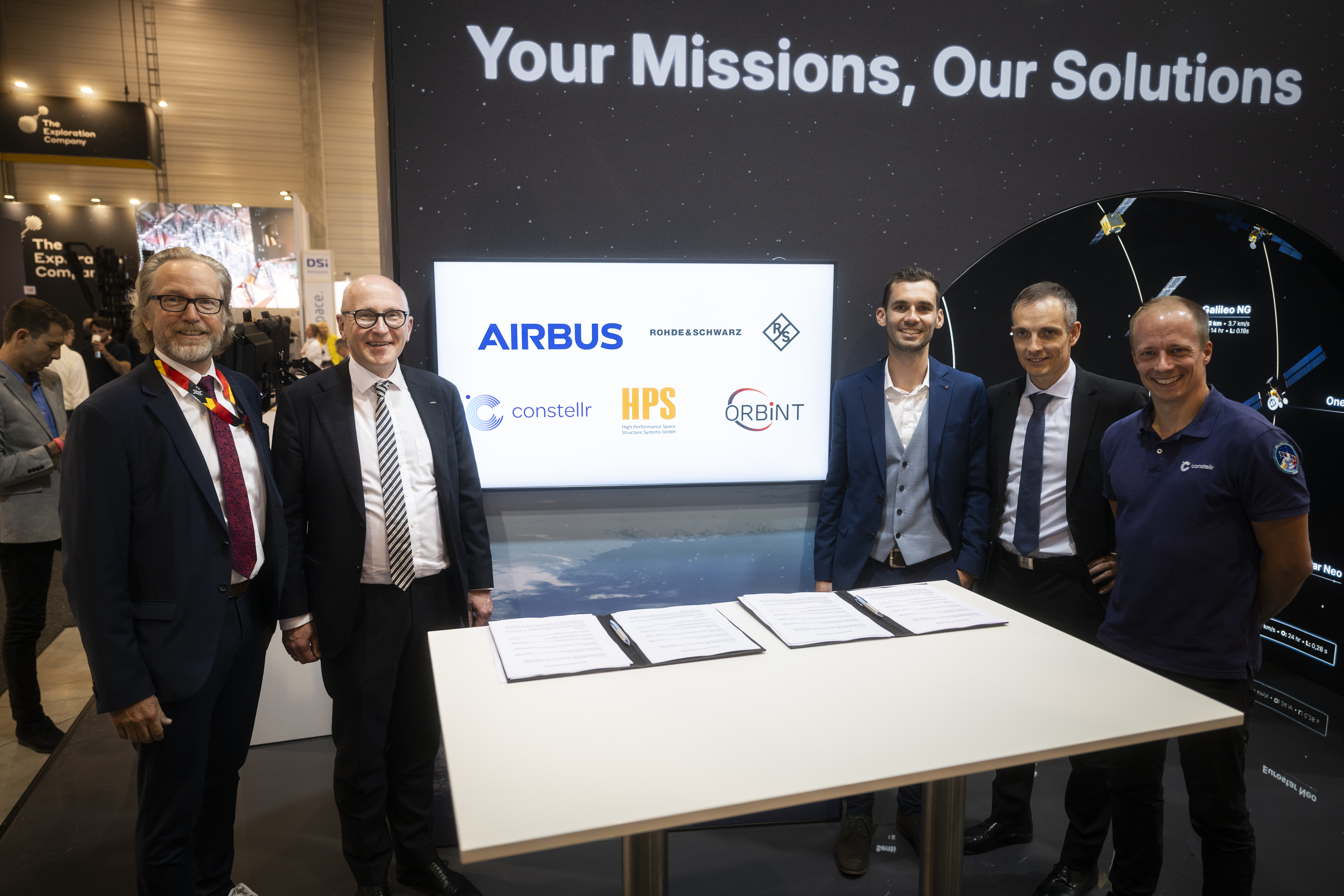
Berlin Air Show, Germany – 10 June 2026 – Airbus Defence and Space has signed a Memorandum of Understanding with Rohde & Schwarz, constellr, Orbint and High Performance Space Structure Systems (HPS) to collaborate on a satellite-based Earth observation and Intelligence, Surveillance, and Reconnaissance (ISR) solution. Led by Airbus as prime contractor and system integrator, the consortium brings together five complementary German specialists to address growing governmental demand for sovereign, end-to-end space-based surveillance capabilities, independent of non-European dependencies.
“Europe has the talent, the technology, and the industrial base to build its own space intelligence infrastructure and the strategic imperative to do so,” said Mike Schöllhorn, CEO of Airbus Defence and Space. “This consortium brings together five German companies whose capabilities are genuinely complementary. Together, we can deliver a sovereign, end-to-end solution that no single company could offer alone.”
Max Gulde, CEO and Co-Founder, constellr: “This is a mission before it is a contract. We are joining this consortium because thermal infrared reconnaissance — the ability to detect operational activity, equipment state, and early-warning indicators that remain invisible to optical and radar sensors — is precisely where the ISR capability gap is greatest. We are proud to contribute that alongside Airbus, and to bring an already operational, sovereign German thermal ISR capability into a programme of this strategic importance.”
Ernst K. Pfeiffer, CEO of HPS GmbH: “It is a very positive sign that German prime contractors like Airbus Defence and Space are already incorporating German supplier SMEs like HPS into their system concepts right from the start. We are technically capable of delivering, extremely agile when it comes to scaling, and, above all, oriented toward the long term. A sovereign space architecture offers sufficient opportunities for the entire German space ecosystem, and the political will can be implemented very effectively. Many thanks to Airbus for his motivation to bring SMEs on board for defense missions.”
The five partners combine complementary capabilities across the full intelligence chain, and proven expertise along every stage of modern Earth observation and ISR. Airbus is responsible for overall mission and system architecture, end-to-end integration, programme management, and the customer interface.
Rohde & Schwarz provides high-performance RF components, signal processing technologies, and radar antenna systems, core competencies developed over decades for the most demanding security applications.
Orbint brings geolocation methods, data processing algorithms, and system concept contributions.
HPS delivers space-qualified special reflector antennas optimised for high-frequency Earth observation and communication payloads.
Constellr contributes thermal infrared satellite systems based on both its current and next-generation platforms, supporting initial and full operational capability.
The joint solution addresses the full Earth observation chain, covering multi-sensor tasking, collection, processing, exploitation and dissemination. It integrates electro-optical and infrared (EO/IR), synthetic aperture radar (SAR)-derived products, and signal-related geospatial intelligence outputs into coherent, customer-ready services.
The consortium’s formation reflects a growing recognition across European governments and defence institutions that strategic autonomy requires indigenous space intelligence capabilities. With all five companies headquartered in Germany, the partnership represents a concentrated national industrial response to that demand and a concrete step towards a European sovereign ISR architecture.
The parties have started their collaboration on a non-exclusive basis.
Pictures: Copyright Airbus Defence and Space
Contacts for the media:
Ralph HEINRICH
Airbus Defence and Space
+49 (0)171 30 49 751
ralph.heinrich@airbus.com
Jeremy CLOSE
Airbus Defence and Space
+44 776 653 6572
jeremy.close@airbus.com
Guardian Angel VIGIL in Space – For the Safety of Earth
VIGIL Antenna ordered to HPS: Safeguarding Data from Space
June 2026
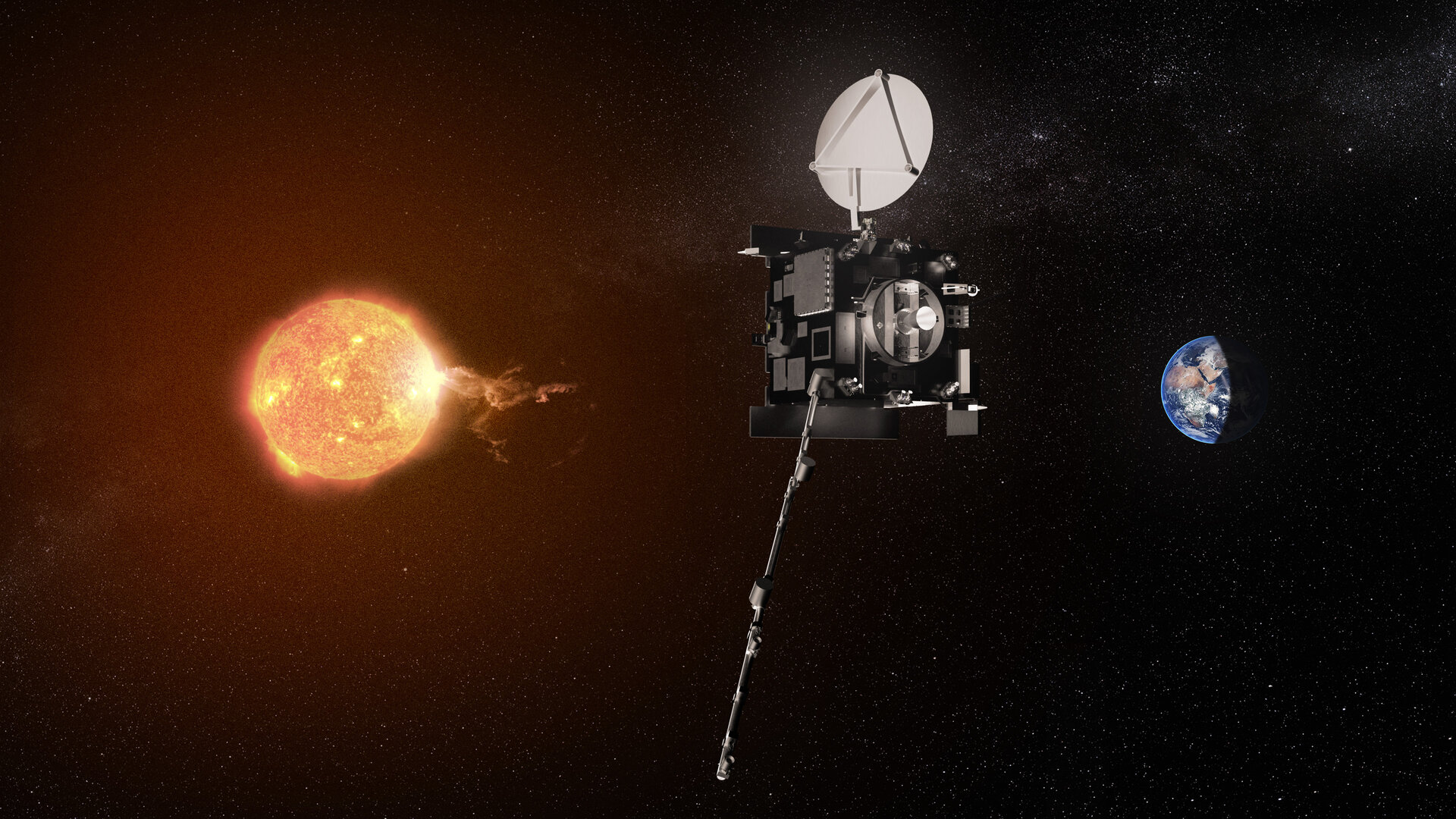
Modern technology underpins complex fields such as energy systems, telecommunications, navigation, and satellite operations in our society. However, their security is fragile and constantly threatened by the relentless streams of particles and magnetic fields emitted by the Sun. While humans cannot influence these natural forces directly, we can defend against them: with a guardian angel in space that provides timely warnings and enables long-term forecasts. This is precisely what VIGIL is – the iconic ESA mission aimed at establishing a globally effective early warning system from a stable vantage point in space at Lagrange Point L5, located about sixty degrees behind Earth on its orbit around the Sun.
From this side-on perspective, VIGIL can assess the spread of coronal mass ejections (CMEs) along the Sun–Earth line much more accurately: speed, direction, and probable impact geometry become clearer. Additionally, active regions on the Sun can be identified earlier before they rotate into the “geo-effective” side as seen from Earth. Both aspects are crucial for issuing warnings not only earlier but, above all, with greater precision. In practice, this means that operators of critical systems receive a more robust basis for decision-making – granting them more time to initiate protective measures and, thanks to improved data, reducing unnecessary interventions in cases of false alarms.
The mission and observation technology of Earth’s new guardian angel is made in Europe, and its ability to reliably transmit observations over a distance of 1.5 million kilometres to ground stations on Earth comes from Bavaria, courtesy of the medium-sized Munich antenna specialist HPS. What makes the HPS antenna special? A 2-metre reflector diameter, extremely lightweight and dimensionally stable thanks to advanced carbon technology, ensures reliable data transmission in the X-band. Safely stowed for launch, the folded antenna allows both satellite and antenna to fit into the rocket.
For the demanding task of developing and custom-manufacturing this mission-critical piece of high-tech equipment, the schedule is marked by tight milestones leading up to delivery in early 2029. The contract has a seven-figure financial volume and is being realised by a specially assembled team of nearly ten engineers and technicians from HPS’s Munich headquarters, together with subcontractors INVENT GmbH (Braunschweig) and HPS-Romania (Bucharest).
The antenna contract signed by HPS end May 2026 with the customer and satellite prime Airbus-UK marks another milestone in HPS’s growth trajectory, paved both by high-performance ClassicSpace products such as the VIGIL antenna and by serialised products like small broadband-antennas or deorbit sail modules. Furthermore, the contract demonstrates a special programmatic ESA success: “Barely 6 months after the ESA Ministerial Council 2025, we can present the VIGIL antenna contract as a success story to decision-makers in Bavaria and Berlin, showing that German SME technology can make a significant contribution to global security-relevant missions. Many thanks, of course, to ESA and Airbus for their trust in our abilities, especially to BMFTR Minister Dorothee Bär, DLR Director Walther Pelzer, and the Bavarian Ministry for Economic Affairs led by Minister Hubert Aiwanger and State Secretary Tobias Gotthardt for their efforts in putting together the CM25-budget, including additional support for VIGIL from the Ministry of Defence BMVg,” says HPS CEO Dr.-Ing. Ernst K. Pfeiffer.
HPS supplies the antenna for Europe’s second iconic asteroid mission
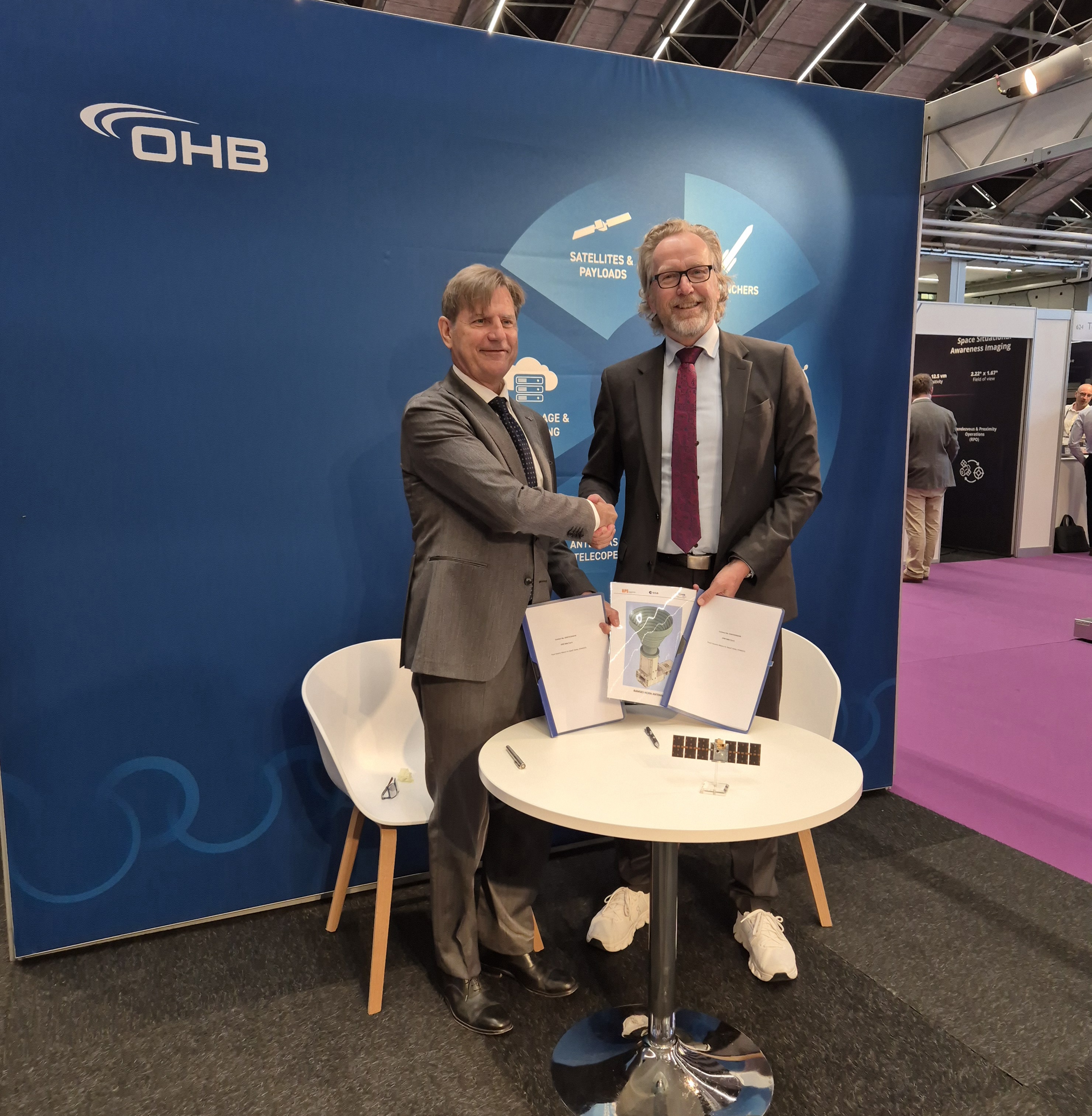
Contract Signature between OHB-IT and HPS-DE on-site SmallSat Europe Conference on May 26.
May 2026
Friday, 13th of April 2029: Traveling at 45,080 km/h, the approximately 350-meter-long asteroid Apophis — named after the god of destruction — will race out of the depths of its orbit and pass Earth at a distance of just 32,000 kilometers, close enough for people on Earth to witness this near-miss. Much closer still, however, will be ESA’s asteroid hunter Ramses (Rapid Apophis Mission for Space Safety), a spacecraft built by OHB Italia and tasked with studying this unusually large primordial remnant of galactic evolution in situ. Of particular scientific interest is the opportunity to observe the behavior of its surface and internal layers, and above all to document the asteroid’s response to Earth’s immense gravitational forces.
For this mission, the spacecraft’s antenna is of central importance. It is the communications lifeline between the events unfolding live in space and the scientists in Germany, across Europe, and in Japan monitoring the mission from Earth. As with the already operational HERA mission, Munich-based antenna specialist HPS GmbH has been selected for this role.
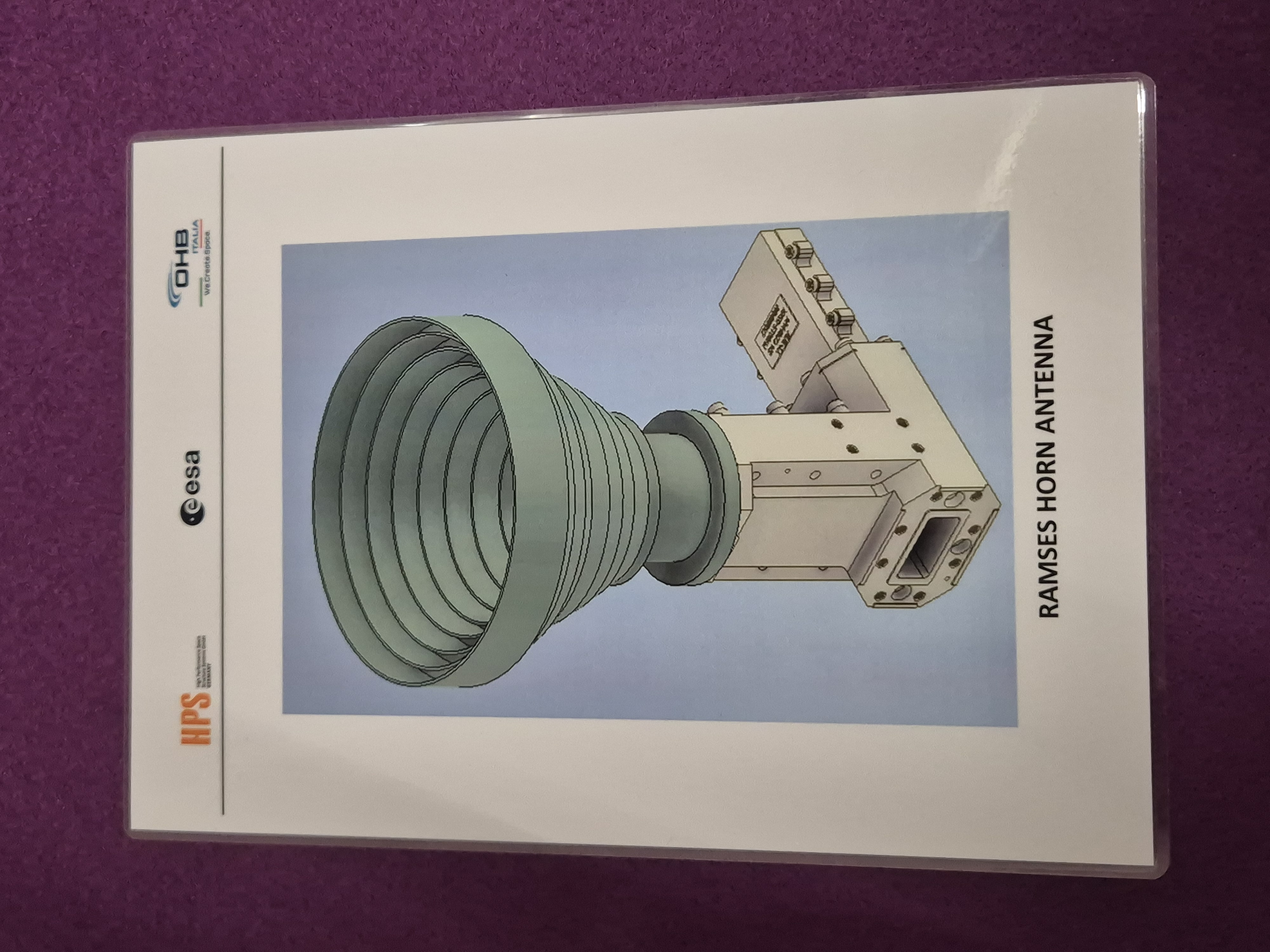
HPS’s X-band module is a custom-designed horn antenna made from a high-strength yet lightweight aluminum alloy, offering excellent radiation and gain characteristics. For HPS, drawing on experience from major antenna projects such as the Euclid mission (ESA, with TAS-Spain as direct customer), Heinrich Hertz (DLR, with TESAT/OHB as direct customer) and HERA (ESA, with OHB-Bremen as direct customer), this antenna falls within a well-established field of technology.
With the contract now in place and the antenna concept defined during the preliminary phases, the industrial partners are moving into the detailed design and manufacturing of the Ramses flight hardware. Next year, these components will undergo environmental and functional testing to ensure they are fit for launch and for operation in deep space.
Ramses is scheduled to launch as early as spring 2028 and reach Apophis in time for its April 2029 flyby, enabling scientists to observe the asteroid before, during, and after the event. This ESA mission supports the core objectives of the Space Safety Programme by improving knowledge of how near-Earth objects behave under external influences and by further developing strategies to defend against potentially hazardous asteroids.
On Tuesday, May 26, Roberto Aceti (CEO OHB-Italia) and Ernst K. Pfeiffer (CEO HPS GmbH, Germany) celebrated the contract signature on-site the SmallSat Europe Conference in Amsterdam (NL).
Ernst K. Pfeiffer commented: “It is fantastic to be part of this exceptional mission, and it is an honor that our antenna will transmit these highly fascinating data back to Earth. Images of the asteroid — perhaps even with Earth in the background — will be seen around the world. It is great that Germany decided to participate in this mission at the CM25 conference in November, as this now enables SMEs to contribute their high-tech capabilities as well. I am pleased to further expand now our cooperation with the prime contractor OHB Italia.”
Roberto Aceti, CEO of OHB Italia, commented: “This contract further consolidates the cooperation between OHB Italia and HPS GmbH on advanced space systems. The Medium Gain Antenna is an important element of the RAMSES mission communication chain and its development reflects the value of specialized European industrial capabilities in support of complex exploration missions.”
Pushing the limits of what’s possible in CubeSat technology – for science, for Earth, for the future
April 2025
We are thrilled to announce that HPS GmbH has been awarded a new Technology Activity by the European Space Agency (ESA)! The contract signature has been taken place on 08.04.2025.
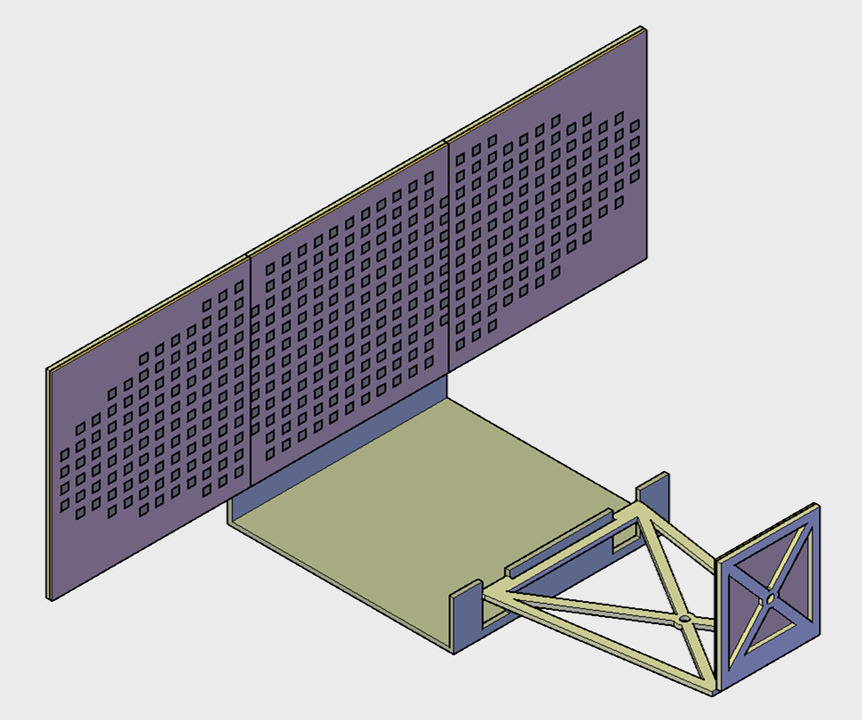
In this groundbreaking GSTP-project, we will develop a cutting-edge CubeSat deployable ArrayAntenna in collaboration with our esteemed partners at Fraunhofer-Gesellschaft (IIS, Germany). This innovative technology, known as MANT (Miniaturized Deployable Antenna for Small and Nanosatellites), will reach TRL6 by the end of the project, marking a significant advancement for the capabilities of small and nanosatellites focussed to civil Earth Observation applications, which always would enable also “Dual Use”. The project is fully funded with a budget of 750,000 euros and will run for two years.
We are excited to contribute to the next generation of satellite technology, advancing small satellite communication with more efficient, compact, and powerful solutions. Stay tuned for updates such as for detailed geometries (in stowed configuration: less than 1U), frequencies and interfaces, as we never stop working towards transforming space technology!
Next Milestone: Requirements Review by end of May.
Cubesat-UDAN: CDR successfully completed – a major milestone for Europe’s disruptive antenna technology
April 2025
NewSpace relies primarily on small satellites. However, their efficiency is primarily based on antenna performance: the smaller the satellite, the lower the antenna performance and the more expensive it is to technically compensate for this on the ground. The solution from HPS Munich and its Romanian subsidiary in Bucharest: an antenna that can be deployed outside the satellite in the form of a 50 cm high conical quadruple helix and 90 cm diameter ground plane with the additional advantage that it can be scaled to even lower or higher frequencies than the planned bandwidth of between 410 and 460 Mhz but always keeping a gain above 10 dBi. Stowed together for the launch phase, the antenna package is only 10x10x15 cm in size.
ESA was convinced and awarded the development contract in 2018 within its ARTES program to the German specialist for deployable antennas, HPS GmbH in Munich and its Romanian subsidiary HPS S.R.L., Bucharest. In the meantime, the German Space Agency at DLR has provided further ARTES funding to maximize efficient development.
We are delighted that the next major milestone has also been passed with flying colors: the punctual completion of the CDR phase in March 2025. This will now be followed by the production of the engineering model in the second and third quarters and then the test campaign; the contract ends in the fourth quarter of 2025. HPS CEO Ernst K. Pfeiffer comments “With this project completion, HPS will raise UDAN’s maturity level to TRL 6 and then finally to TRL 9 with a planned in-orbit demonstration (IOD). This means nothing less than clear the way for the latest generation of antenna technology on the commercial NewSpace market!”

State-of-the-art antenna serving one of the most ambitious missions ever
March 2025
“We are opening up a treasure trove of information for scientists,” said Esa Science Director Carole Mundell. Clotilde Laigle from the “Euclid” consortium described the newly won probe of EUCLID as a “gold mine of data”.
HPS, leading provider of advanced antenna- and reflector-technologies, applauds the European Space Agency ESA to this remarkable progress in the project EUCLID (European Space Agency’s Cosmic Vision: Euclid) which aims to unravel the mysteries of the dark universe and gain insights into the nature of dark matter and dark energy.
EUCLID´s Antenna Reflector Assembly (ARA)” developed by HPS under TAS-contract represents a significant advancement in space communication technology. Its innovative design and advanced features make it an ideal choice for the mission, enabling high-speed data transmission and reception from the spacecraft to Earth and back.
“We are thrilled to contribute significantly to the Euclid mission,” says Ernst K. Pfeiffer, CEO of HPS. “Our cutting-edge technology facilitates seamless communication between the spacecraft and ground stations and allows scientists to unlock and reveal to us on Earth all those mysteries of the dark universe.”

Picture by ESA
Space premiere also for the innovative BANT-1 reflector antenna from HPS
January 2025
On January 14, 2025, “SIGI”, the first satellite from the NextSpace company Reflex Aerospace, Berlin/Munich, was launched on board a Falcon 9 – Rideshare Mission Transporter-12. “NextSpace” is the term legally reserved for exclusive use by Reflex to describe the new speed in the development, production and provision of space technology, coupled with innovative versatility as a leitmotif for the performance of the product.
To a large extent, this also applied to an essential element of the satellite not manufactured by Reflex: the core broadband reflector antenna developed by HPS from the medium-sized space technology company HPS GmbH (Munich, Germany) with a cavity-backed spiral antenna as an axial feed for a wide bandwidth and considerable gain – and all that from order to delivery in just 12 months.
HPS congratulates Reflex Aerospace on the first launch of one of its products and looks forward to working with them on further NextSpace challenges in space.

Pictures by SpaceX
Antenna specialist HPS conquers new territory in RF applications with verification of innovative 3D production
Even formerly very sceptical augurs of space travel now agree that the ability to largely automate the series production of lightweight components while minimizing raw materials and ensuring maximum reliability will have a significant impact on the future development of applicable technologies.
However, the central prerequisite for the implementation of such visions is still a very classic step-by-step verification, in this case of two materials selected by the HPS engineers using the new ESA standard ECSS-Q-ST-70-80C.
Given the future potential of such technology, the European and German space agencies have a primary interest in the success of the research at HPS and provided GSTP funding for the 3DPAN2 project: “3D-Printed Antenna 2” is a follow-up project to 3DPAN, which was completed five years ago and initially demonstrated the feasibility in principle of 3D-printed RF components.
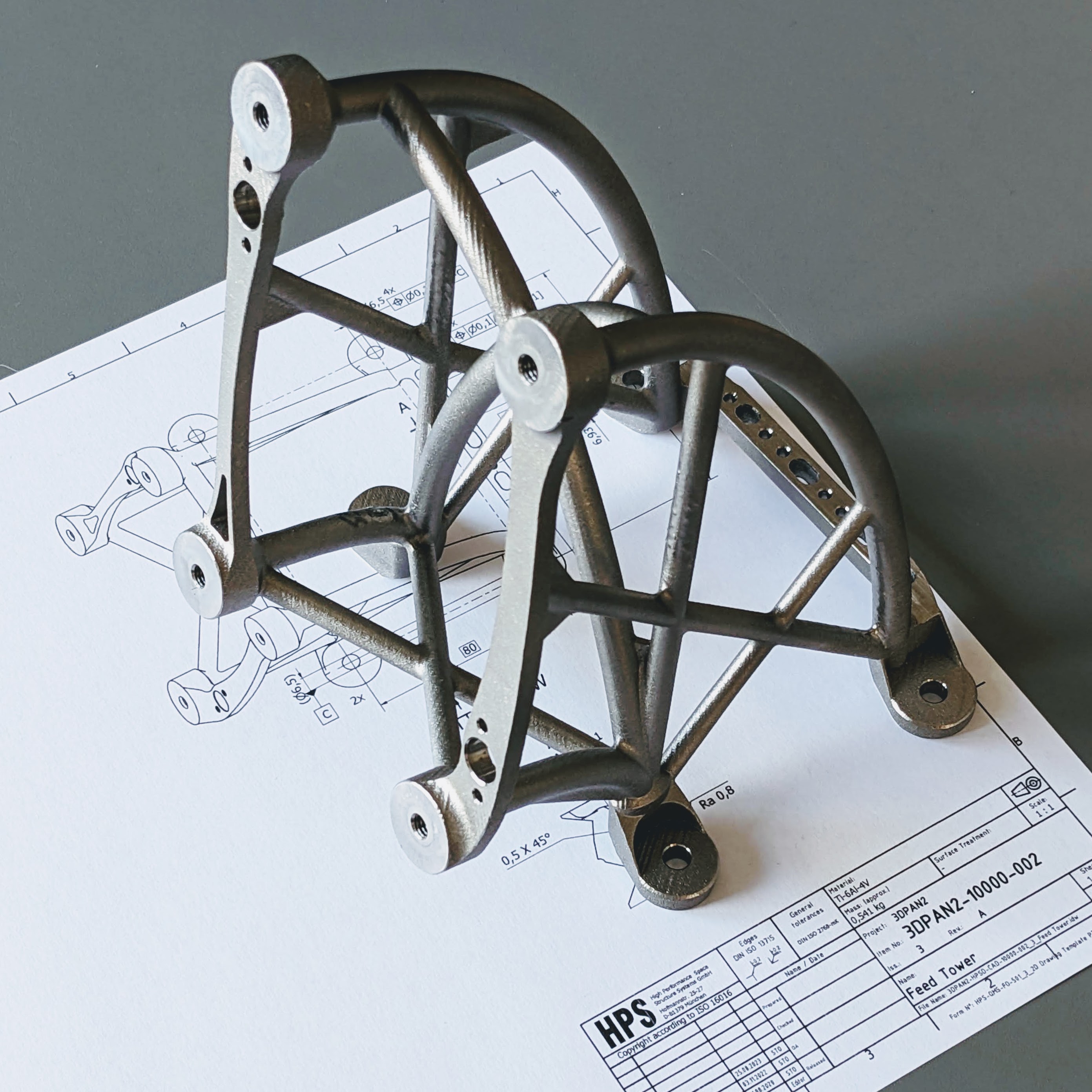
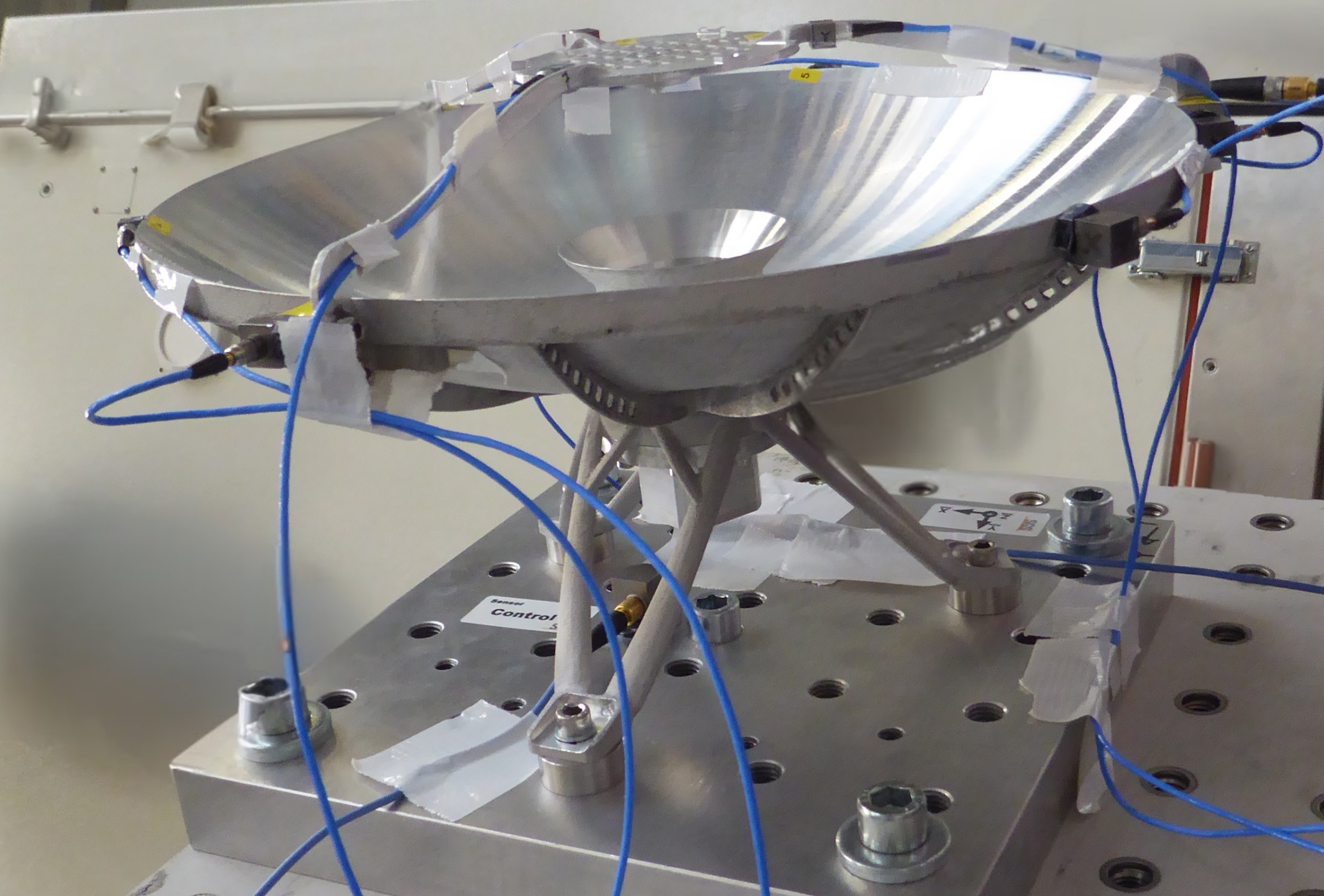
The product objective was an extremely lightweight X-band antenna with a diameter of ~30cm for the data downlink of earth observation satellites. It was finally manufactured from the aluminum alloy SCALMALLOY at the sub-contractor APWORKS GmbH in Ottobrunn. In addition, a filigree feed support bracket made of titanium was manufactured for fold-out antennas by the long-standing HPS trusted partner, the Fraunhofer Institute for Material and Beam Technology IWS, Dresden, as a subcontractor.
Meanwhile, the respective designs and FE analyses, as well as their iterative optimization, were carried out by HPS in Munich itself.
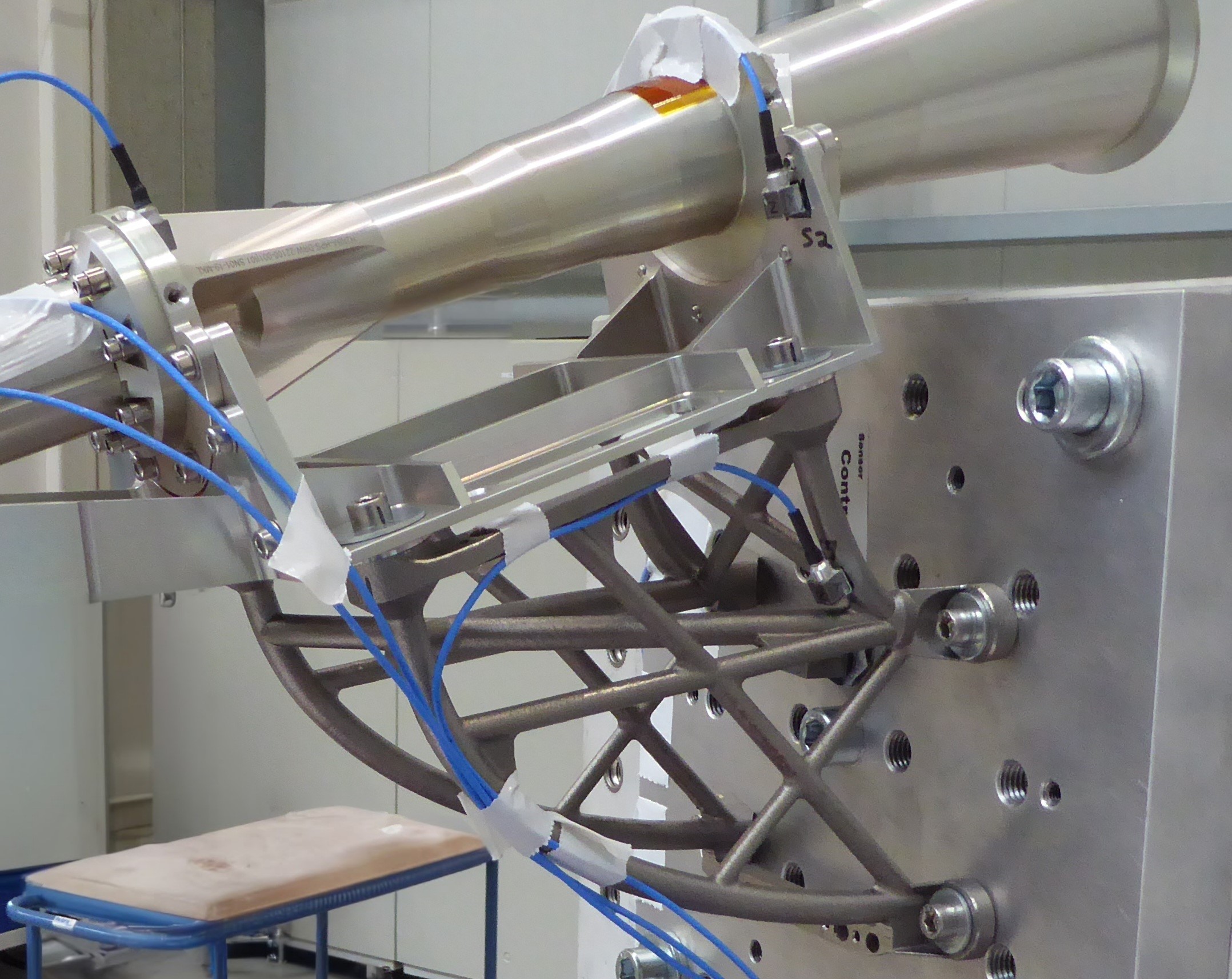
The final tests delivered positive results that exceeded all expectations. This applied in particular to the RF performance of the X-band antenna in the Compensated Compact Range (Munich University of Applied Science MUAS). Resistance to vibration (sine + random) was also successfully demonstrated for both demonstrators at SGS GmbH, Geretsried: here too, everything went without complications, i.e. above all without damage or deformation. Even a final TVAC test (10 cycles between +120°C and – 120°C) showed no cracks or deformations on the demonstrators.
Olaf Stolz, the responsible project manager at HPS, summed up the project as follows: “The objectives of the verification processes were achieved without any restrictions: the additively manufactured demonstrators were 20% and 25% lighter than corresponding conventionally manufactured components – a well-known enormous advantage in space travel. There were no restrictions on qualification for space applications. We would like to thank our cooperation partners, especially Dr. Samira Gruber (Fraunhofer IWS) and Mr. Nicklas Schwab (APWORKS) for the extremely good and successful cooperation in the project, as well as ESA, in particular Ms. Isabel Olaya Leon, Technical Officer of the 3DPAN2 project.
HPS CEO Ernst K. Pfeiffer is delighted: “It is fantastic that we are already implementing 3D printed components with the technology results of the ESA GSTP program in current flight projects. A goal that we set 8 years ago and that is essential for the future market has now been achieved.”
Producing antennas in series
For over 20 years, the Munich-based space technology company HPS has been known for breaking new ground wherever possible and establishing an increasingly solid bridge between ClassicSpace and CommercialSpace with innovations of all kinds. This applies to products such as deployable antennas of all sizes through to processes such as the series production of the deorbit sail module product family (ADEO).
With the implementation of a further process innovation, HPS is now also realizing new efficiency horizons in the antenna sector, because a commercial customer is in a hurry: more than 20 broadband antennas are needed, in a period of less than only 12 months, starting NOW. HPS is already known from a large number of successfully completed antenna orders – whether from the institutional or commercial sector – for the routine of quality production at a consistently high level that is valued by customers. But now, with the start of small series production, the company is heralding the introduction of a further development stage in the process of merging the quality features of conventional and new space technology into something new and even better. And despite all the high pressure, with the power that comes from calm.